The Herbarium
Part I · Medicinal herbs
Herb. No. 105
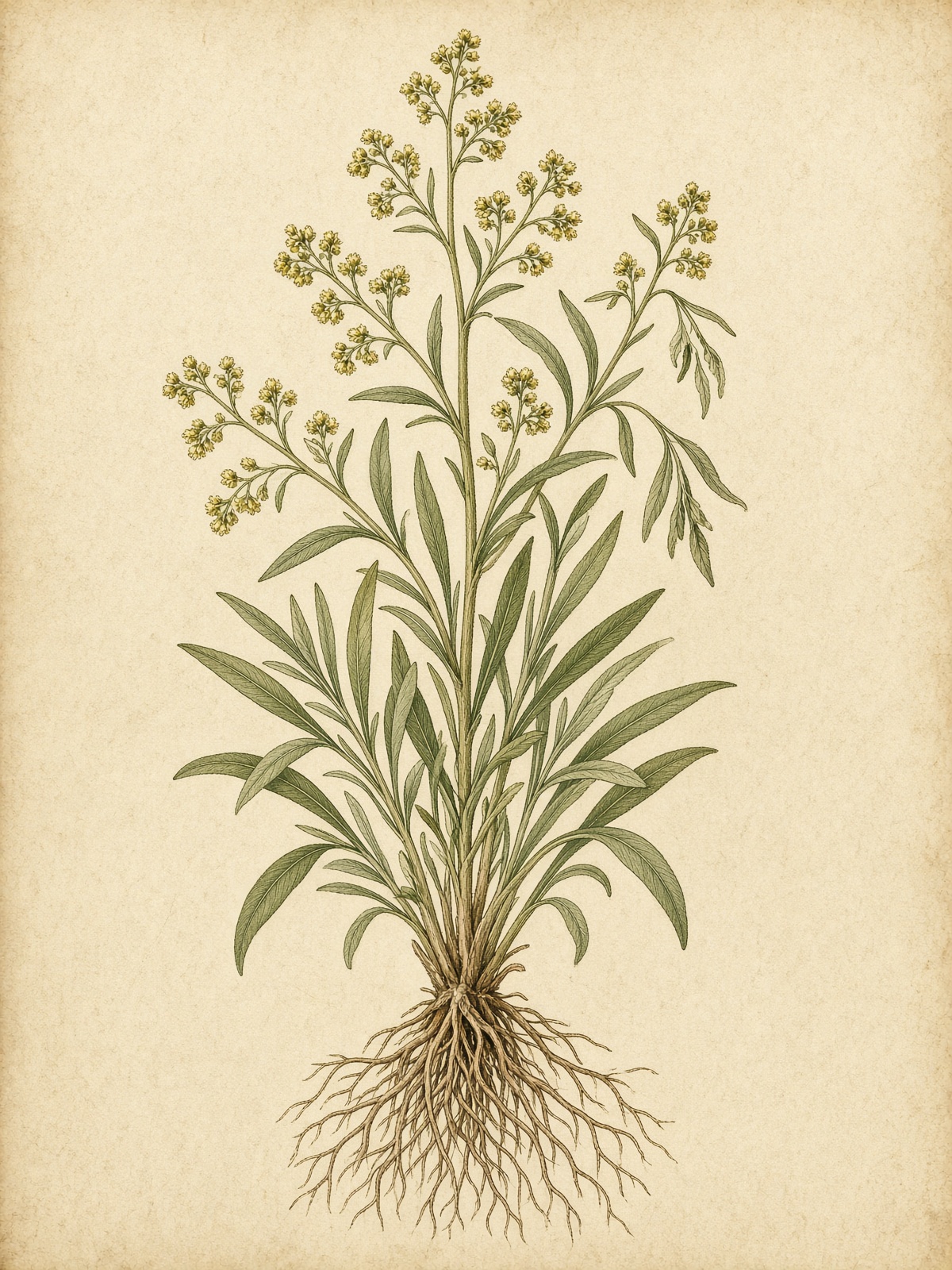
French tarragon
Artemisia dracunculus var. sativa
Asteraceae
Anise-leaf of French kitchens — a sterile clone you buy as a plant, then tarragon-vinegar the rest of your life.
Culinary clone. Russian tarragon (seed-grown) is a harsher, less kitchen plant.
- Parts used
- Leaf
- Traditional notes
- Béarnaise and vinegar · After rich food · Traditional digestive aromatic
- Grow · USDA 6b
- Perennial, USDA 5–9, winter-dry Do not sow. Buy a named French division. In work: Apr · May · Jun · Jul · Aug · Sep
- Harvest
- Cut young tips through summer. Freeze or vinegar the glut.
- If a packet says ‘tarragon seed,’ it is Russian. Walk past it.
- A gravel mulch and a pot you can keep dry in winter.
- Replace a woody clump every three or four years.
Safety
Asteraceae allergy Medicinal oil internally
Lore
French tarragon is a sterile clone of an Artemisia; if it sets seed, you bought the Russian kind and will be disappointed. Béarnaise is a delivery system for the leaf. The name is a little dragon, dracunculus.
The Herbarium — a teaching catalog, not a clinic. Traditional use is history, not a prescription. USDA 6b dates are a week either way, not a promise. Do not eat, drink, or harvest a plant you cannot name.