The Herbarium
Part I · Medicinal herbs
Herb. No. 120
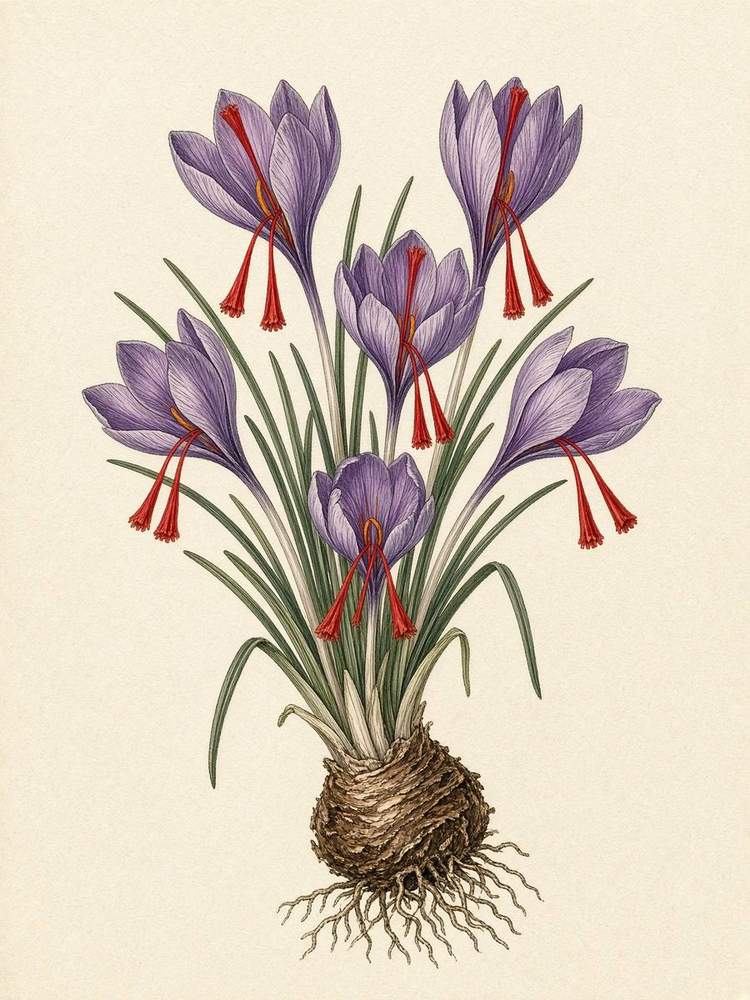
Saffron
Crocus sativus
Iridaceae
Three red threads from a sterile autumn crocus — the dearest spice on earth, and a traditional mood-and-digestion pinch.
Culinary stigma. Medicinal amounts in pregnancy are unsafe. Do not confuse with autumn-crocus (Colchicum), which is deadly.
- Parts used
- Dried stigma
- Traditional notes
- Kitchen spice · Traditional low-mood folklore · After a heavy meal · Festival rice and broth
- Grow · USDA 6b
- Corm, USDA 6–8 with sharp drainage; hotter zones want a dry summer bake Plant named C. sativus corms in late summer, 4 inches deep. It does not come from seed. In work: Aug · Sep · Oct · Nov
- Harvest
- Pick the three red stigmas the morning the flower opens, then dry in the shade at once.
- Buy Crocus sativus, not Colchicum, not a spring crocus.
- A dozen corms is a garnish. A saffron field is a thousand.
- Dry the same morning. Damp threads mold and fade.
Safety
Pregnancy in medicinal — not food — amounts Colchicum or any unnamed autumn crocus
Lookalikes
- Autumn crocus — Colchicum in a paella is a poison, not a spice. True saffron is Crocus sativus; autumn crocus is a lily in disguise.
Lore
Cleopatra was said to bathe in it; the Phoenicians dyed wedding veils the same red-gold. Medieval Venetian merchants were hanged for cutting saffron with marigold. The word is Arabic zaʿfarān by way of Persian. Each flower offers three threads and no more, which is why a gram still costs like a small jewel.
The Herbarium — a teaching catalog, not a clinic. Traditional use is history, not a prescription. USDA 6b dates are a week either way, not a promise. Do not eat, drink, or harvest a plant you cannot name.