The Herbarium
Part VI · Regulated or restricted
Herb. No. 037
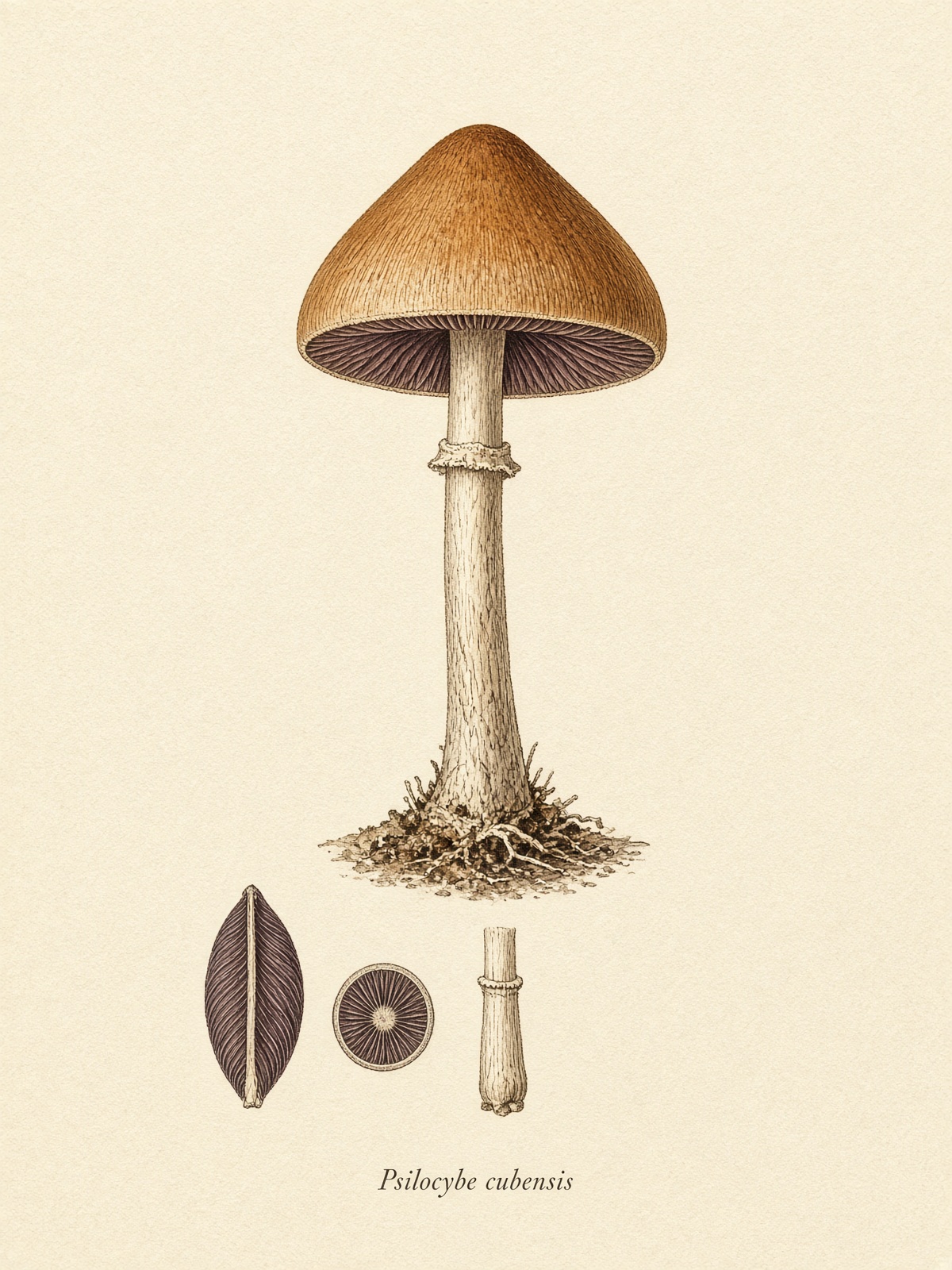
Psilocybe mushrooms
Psilocybe cubensis
Hymenogastraceae
A well-known psychoactive woodland and pasture genus, now in clinical trials for depression — still illegal to grow or possess in most places.
Psilocybin and psilocin are US Schedule I substances. The mushrooms that contain them are illegal to cultivate, possess, or distribute under federal law, with narrow local decriminalization in a few cities and licensed research/therapy programs. Tennessee has not decriminalized them.
- Parts used
- Fruiting body — in licensed research only
- Traditional notes
- Mesoamerican ceremonial use (other Psilocybe species) · Supervised clinical research (modern)
- Habitat only
- P. cubensis is associated with well-manured subtropical pasture. Other Psilocybe species inhabit wood chips and mossy conifer woods. Habitat notes are for scientific literacy, not for collecting.
- No cultivation, extraction, or dosing notes. Possession is illegal in most of the US.
- The map is tropical grassland habitat, not a place to hunt.
- Lookalikes include deadly galerinas. This is a law-and-harm plate.
Safety
Personal or family psychosis or bipolar I Unsupervised use Foraging Pregnancy
Lookalikes
- Button mushroom — Little brown mushrooms are a legal and medical problem, not a pizza topping. This catalog will name them for education. It will not tell you to eat them.
Lore
Mazatec and other Mesoamerican traditions used Psilocybe in ceremony long before a New York banker coined ‘magic mushroom’ in 1957. The species is a legal object in most of the US. The plate names it so the law and the lookalike can be seen together.
The Herbarium — a teaching catalog, not a clinic. Traditional use is history, not a prescription. USDA 6b dates are a week either way, not a promise. Do not eat, drink, or harvest a plant you cannot name.