The Herbarium
Part V · Garden flowers
Herb. No. 251
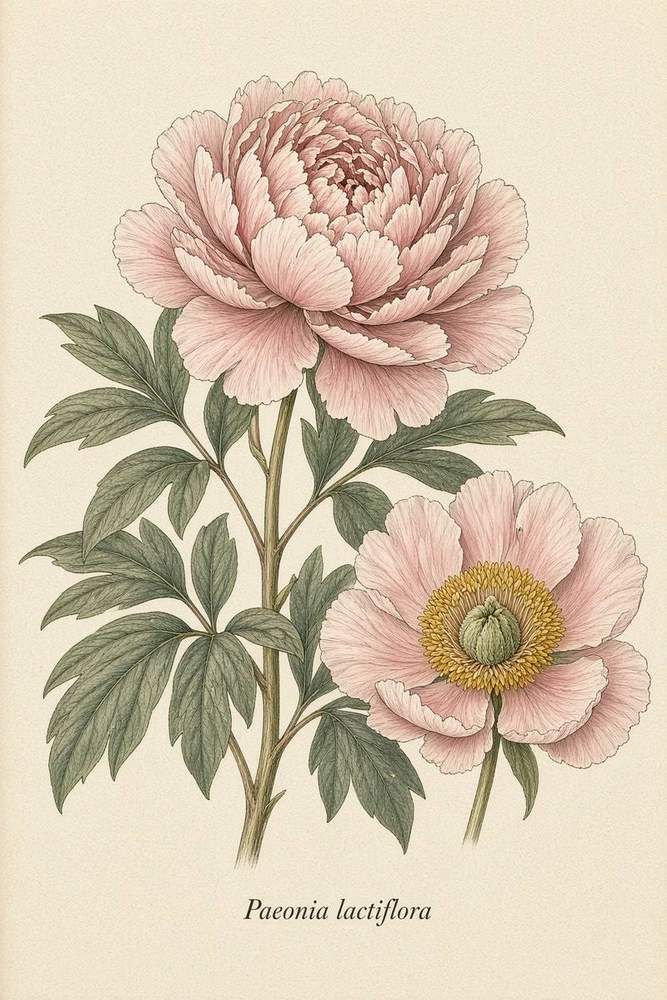
Garden peony
Paeonia lactiflora
Paeoniaceae
The late-spring shrub of buds that ants tend — a long-lived perennial whose petals, not its root, are the only kitchen note here.
Herbaceous garden peony. Petals of unsprayed flowers are sometimes candied. Bark and root of tree peony are a different, traditional Chinese drug — not a home protocol on this plate.
- Parts used
- Petal (unsprayed)
- Traditional notes
- Cut flower · Candied petal · Traditional root — not a home dose
- Grow · USDA 6b
- Perennial, zone 3–8. Needs winter chill. Bare-root in fall, eyes up, shallow. Spring-planted pots work if you do not bury the crown. In work: Apr · May · Jun · Sep
- Harvest
- Cut buds when they are marshmallow-soft for the vase. Petals as they open.
- Shallow. A buried crown is a plant that leafs and never flowers.
- Support rings in April, not the day the heads flop.
- Ants are not a problem. Insecticide on buds is.
Safety
Pregnancy: skip peony root entirely. Petals as garnish only, unsprayed.
Companions
Plant with Clove pink, Dog rose, Hollyhock, Lavender.
Lore
Named for Paeon, physician to the gods. Chinese painting treated the flower as rank and summer. American farmyards treated it as the one plant you take when you move house — and then it refuses to bloom for three years, which is how you learn to leave it.
The Herbarium — a teaching catalog, not a clinic. Traditional use is history, not a prescription. USDA 6b dates are a week either way, not a promise. Do not eat, drink, or harvest a plant you cannot name.