The Herbarium
Part I · Medicinal herbs
Herb. No. 124
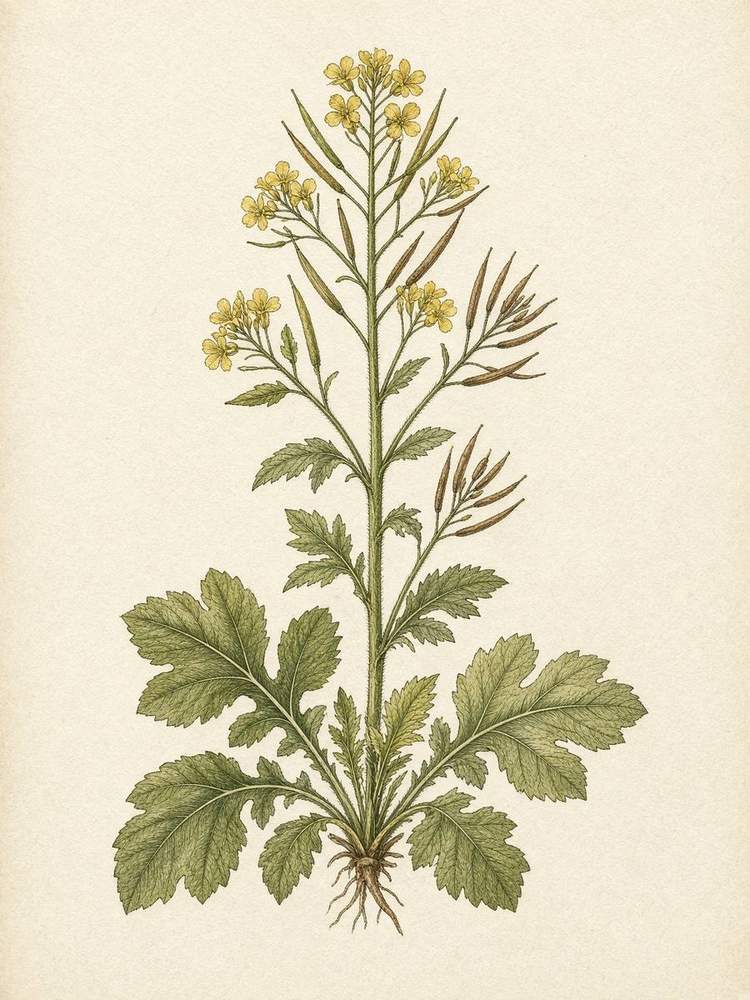
Brown mustard
Brassica juncea
Brassicaceae
The yellow flower that became a jar — a pungent seed, a bitter green, and a traditional chest-plaster plant.
Culinary seed and leaf. Mustard plasters can blister skin; seed oil is food, not a rub, unless labeled.
- Parts used
- Ripe seed · Young leaf
- Traditional notes
- Kitchen spice and green · After-meal heat · Traditional chest plaster (brief, not a burn)
- Grow · USDA 6b
- Cool-season annual. Frost-sweetens the leaf. Direct-sow in early spring or autumn. Successions for leaf. In work: Mar · Apr · May · Aug · Sep · Oct
- Harvest
- Leaf young; seed when pods tan and before they shatter.
- A hot May is a flower stalk, not a salad.
- Bag the pods or the garden becomes mustard.
- Grind seed fresh. A jar of powder is a milder ghost.
Safety
A mustard plaster left until it burns Thyroid caution in huge daily Brassica amounts
Lore
Mustard seed is in the Sanskrit record and in the Gospel parable of the kingdom. The Romans mixed it with grape must — mustum ardens, burning must — which is probably how the English word arrived. Dijon made a fortune on the same seed with a better lawyer.
The Herbarium — a teaching catalog, not a clinic. Traditional use is history, not a prescription. USDA 6b dates are a week either way, not a promise. Do not eat, drink, or harvest a plant you cannot name.