The Herbarium
Part I · Medicinal herbs
Herb. No. 114
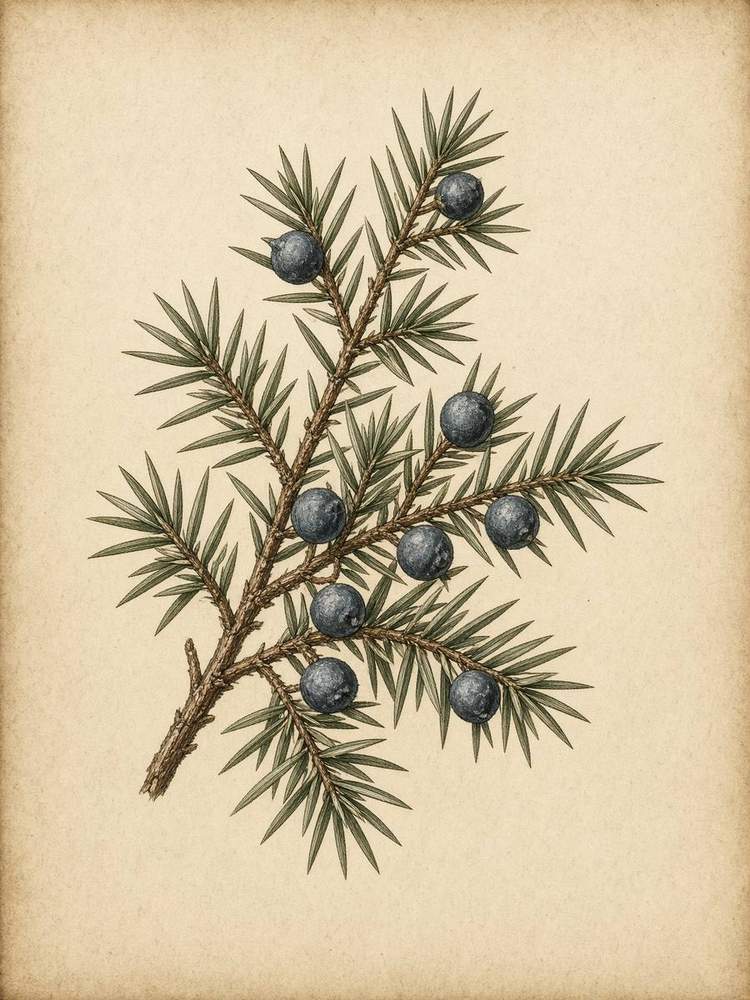
Juniper
Juniperus communis
Cupressaceae
The blue berry that makes gin smell like a northern wood — a roasting spice with a kidney caveat in quantity.
Culinary berry of J. communis. Other junipers, especially J. sabina, are toxic. Gin is a flavored spirit, not a medicine.
- Parts used
- Ripe berry (fleshy cone)
- Traditional notes
- Kitchen spice · Game and cabbage · Traditional diuretic folklore
- Grow · USDA 6b
- Evergreen, USDA 2–8 depending on type A named J. communis. Seed is slow and needs cold. In work: Aug · Sep · Oct
- Harvest
- Ripe blue berries in autumn. They take two years on the shrub.
- Confirm the Latin. Ornamental junipers are not spice.
- Birds will argue the harvest.
- A few berries flavor a pot; a handful is a different drug.
Safety
Pregnancy Kidney disease Any juniper that is not J. communis
Lore
Gin is simply genever — the Dutch for juniper — and the berry was a plague-era fumigant as much as a drink. Medieval kitchens used it the way we use pepper. Sailors chewed the cones against scurvy with mixed success; the pine-citrus smell was the point as much as the vitamin.
The Herbarium — a teaching catalog, not a clinic. Traditional use is history, not a prescription. USDA 6b dates are a week either way, not a promise. Do not eat, drink, or harvest a plant you cannot name.