The Herbarium
Part I · Medicinal herbs
Herb. No. 016
LegalGentle
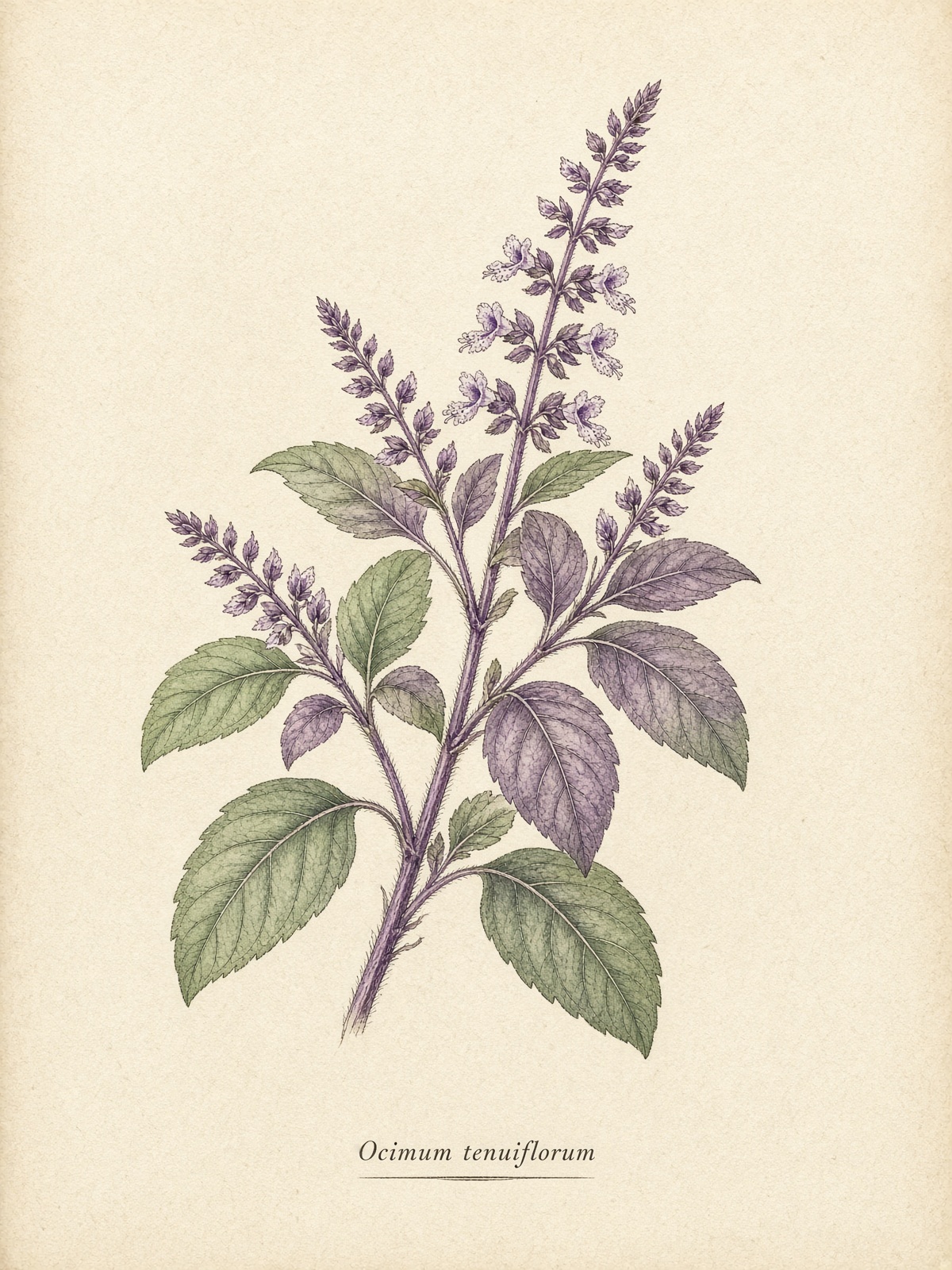
Holy basil
Ocimum tenuiflorum
Lamiaceae
Tulsi — the daily adaptogen tea of Indian households, peppery and clarifying.
Culinary and temple herb (tulsi).
- Parts used
- Leaf and flowering tops
- Traditional notes
- Mental fog under stress · Mild cough · Blood-sugar adjunct in food-like amounts · Daily tonic tea
- Grow · USDA 6b
- Tender annual in temperate zones Start warm indoors. Do not rush it outside. In work: Apr · May · Jun · Jul · Aug · Sep
- Harvest
- Pinch weekly once 8 inches tall. Flavor peaks before hard flower.
- Treat it as a tender basil: heat, sun, and pinching.
- Do not let it flower itself to death if you want leaf.
- Krishna types are spicier; Rama is greener and milder.
Safety
Trying to conceive (traditional anti-fertility use) Close to surgery
Lookalikes
- Sweet basil — Sweet basil and holy basil are both Ocimum, and both are food — but tulsi is a different chemistry and a different kettle. Recipes are not interchangeable.
Lore
Tulsi is a household goddess in many Indian homes, grown on a courtyard altar and not stepped over. Krishna types run purple and peppery; Rama types are greener. It is Ocimum tenuiflorum, not the pesto basil, and the clove smell is the first hint.
The Herbarium — a teaching catalog, not a clinic. Traditional use is history, not a prescription. USDA 6b dates are a week either way, not a promise. Do not eat, drink, or harvest a plant you cannot name.