The Herbarium
Part I · Medicinal herbs
Herb. No. 108
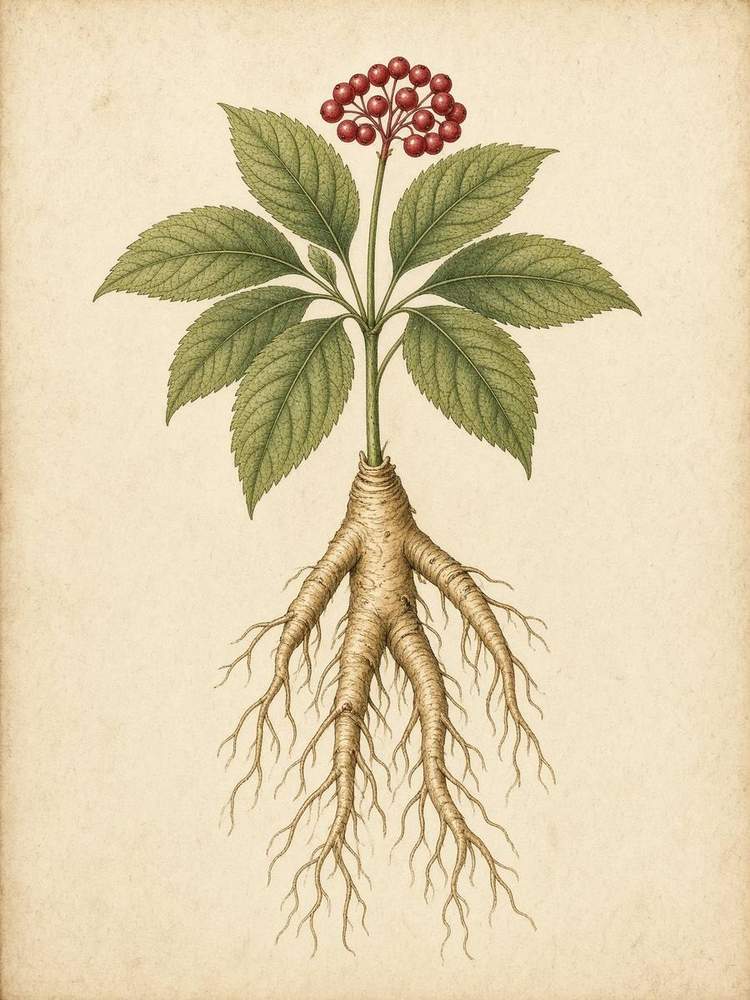
Asian ginseng
Panax ginseng
Araliaceae
The man-shaped root of East Asian tonic medicine — stamina folklore in a slow, expensive crop.
Cultivated root is a legal food-and-tonic crop. Wild Korean and Chinese stands are conservation-sensitive — buy farmed.
- Parts used
- Root
- Traditional notes
- Fatigue · Recovery · Traditional stamina tonic · Cold hands folklore
- Grow · USDA 6b
- Perennial, USDA 4–8, wants woodland shade Stratified seed or a nursery root. This is a years-long crop. In work: Apr · May · Sep · Oct
- Harvest
- Root in autumn of year 4–6 from a bed you planted. Leave wild stands.
- Shade cloth or a north wood edge. Ginseng is a forest plant.
- Buy cultivated seed. Do not start from a wild digging.
- Mice and slugs vote first. Hardware cloth helps.
Safety
Uncontrolled hypertension Pregnancy without advice Acute feverish illness in some traditional systems
Lore
The forked root was read as a little person — panax, the all-heal — and Korean and Chinese courts paid in silver for old wild specimens. The word ginseng is Chinese rénshēn, ‘man root.’ Most of what you can buy now is a farmed shade crop; the wild plant was loved nearly to disappearance.
The Herbarium — a teaching catalog, not a clinic. Traditional use is history, not a prescription. USDA 6b dates are a week either way, not a promise. Do not eat, drink, or harvest a plant you cannot name.