The Herbarium
Part I · Medicinal herbs
Herb. No. 009
LegalCaution
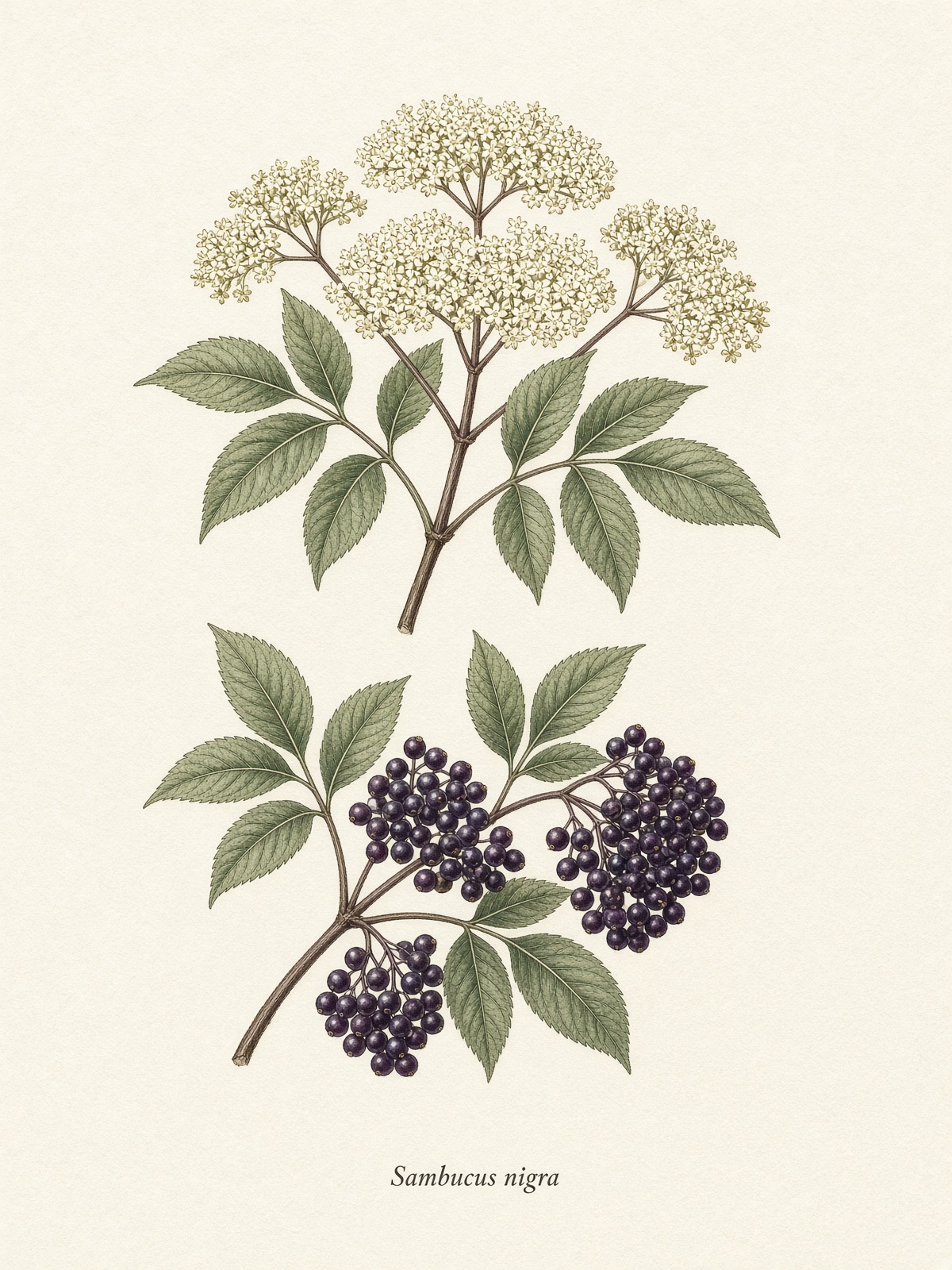
Elderberry
Sambucus nigra
Viburnaceae
Dark berries cooked into syrup at the first winter cough — never eaten raw.
Cooked fruit is a food. Raw berries, leaves, and stems are toxic.
- Parts used
- Ripe berries (cooked) · Flowers
- Traditional notes
- Early cold and flu · Feverish chills (flower tea) · Winter cough
- Grow · USDA 6b
- Shrub, USDA 4–8 (S. nigra / S. canadensis) Hardwood cuttings or nursery plants. Seed is slow. In work: Mar · Apr · May · Jun · Jul · Aug · Sep
- Harvest
- Flowers in early summer (leave some for fruit); berries when fully black.
- Two cultivars for fruit set. Birds will beat you to the clusters — net or pick early.
- Cook the berries. Raw fruit and the rest of the plant are a problem.
- Hardwood cuttings in winter root as if they wanted to.
Safety
Raw consumption Autoimmune disease without advice Unidentified look-alike berries
Lookalikes
- Pokeweed — Purple-black berries on red stems look like a pie fruit. Pokeweed is a purge. Elder is a sambucus, and even that wants cooking.
Lore
Cut an elder without asking and, in northern folklore, you answer to a woman who lives in the tree. The flowers make a cordial; the raw berries make a complaint. Hippocrates already knew the plant as a medicine chest with rules.
The Herbarium — a teaching catalog, not a clinic. Traditional use is history, not a prescription. USDA 6b dates are a week either way, not a promise. Do not eat, drink, or harvest a plant you cannot name.