The Herbarium
Part I · Medicinal herbs
Herb. No. 103
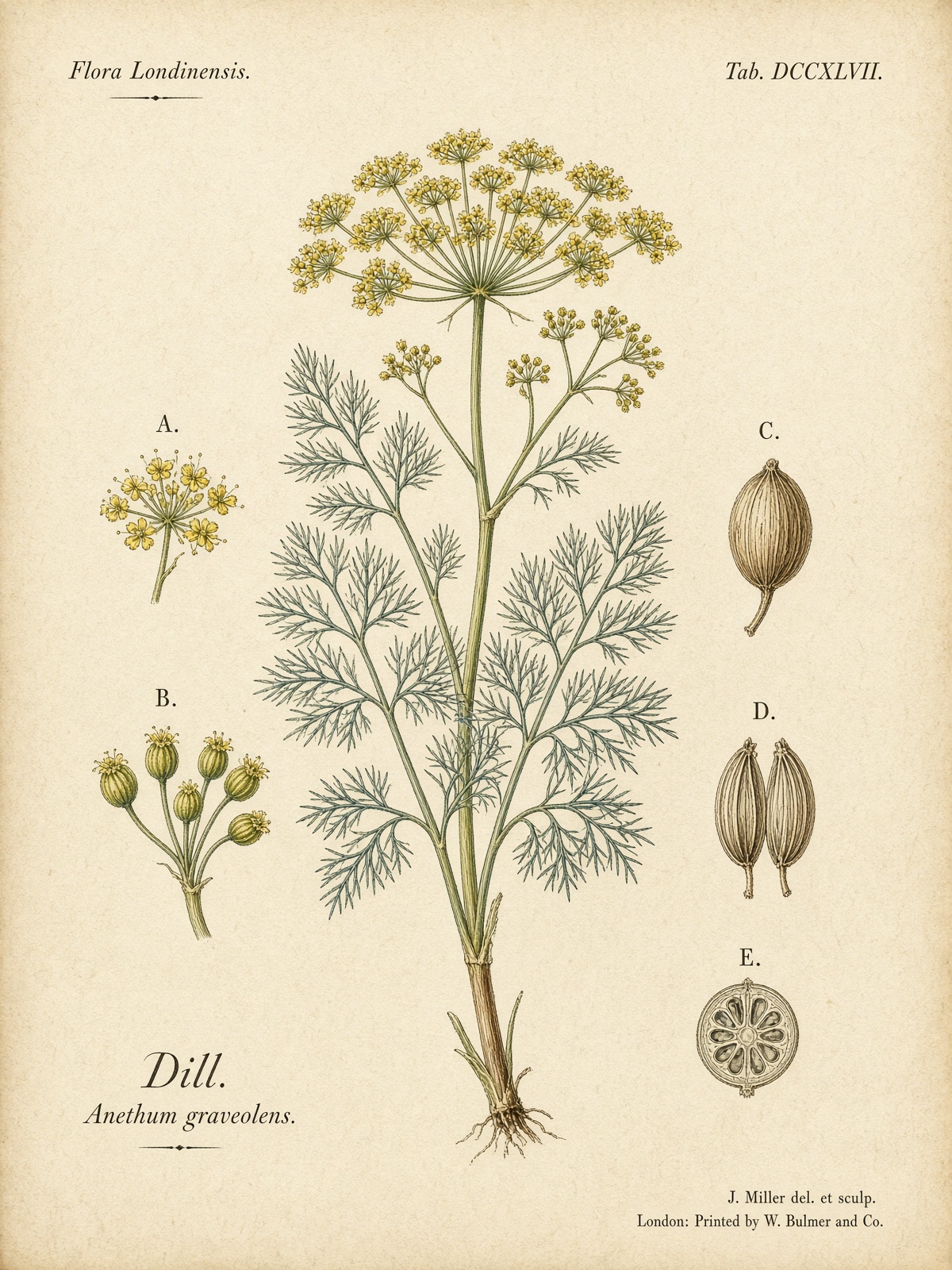
Dill
Anethum graveolens
Apiaceae
Feathery kitchen green and a caraway-cousin seed — the pickle herb, also an after-dinner chew.
Culinary seed and weed. Identify carefully among feathery umbels.
- Parts used
- Leaf · Ripe seed
- Traditional notes
- Pickles and fish · After-meal seed · Traditional colic folklore (weak tea)
- Grow · USDA 6b
- Annual. Cool season. Direct-sow successions. It resents transplanting. In work: Apr · May · Jun · Jul · Aug
- Harvest
- Leaf before bloom; seed when umbels brown.
- Sow every three weeks for leaf. One planting is a bolt.
- Keep away from fennel if you save seed.
- The swallowtail caterpillar is a lodger, not a disaster — plant extra.
Safety
Unidentified wild umbels
Companions
Plant with Broccoli, Cabbage, Calendula, Cornflower, Cucumber, French marigold.
Keep apart from Carrot, Fennel.
Lookalikes
- Poison hemlock — A feathery roadside weed is not a pickle herb. Dill is annual and yellow; hemlock is a biennial tower with white umbels.
- Fennel — Anise cousins in the same bed will cross and confuse a seed harvest. Neither is hemlock, and both have been mistaken for it.
Lore
Dill comes from Old Norse dilla, to lull — a colic name. The feathery weed and the seed are one annual in a hurry. Keep it from fennel if you care about honest grandchildren.
The Herbarium — a teaching catalog, not a clinic. Traditional use is history, not a prescription. USDA 6b dates are a week either way, not a promise. Do not eat, drink, or harvest a plant you cannot name.