The Herbarium
Part I · Medicinal herbs
Herb. No. 112
LegalGentle
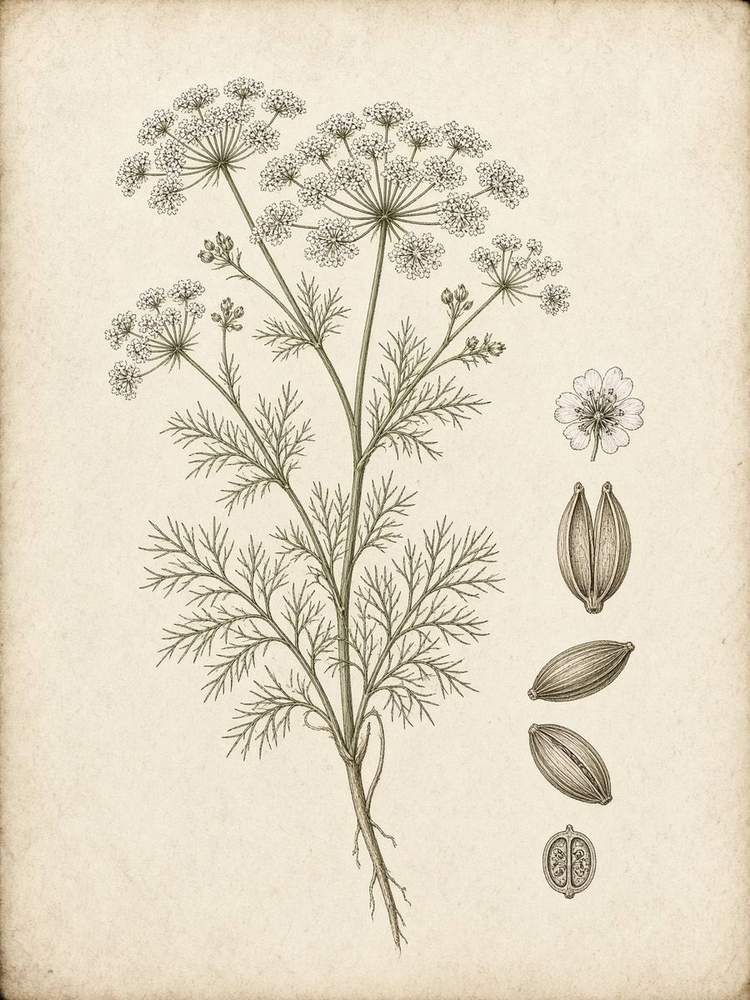
Cumin
Cuminum cyminum
Apiaceae
The warm, earthy seed of every chili and curry — a carminative kitchen spice with a long gut record.
Culinary seed. Identify carefully among umbels if you grow it.
- Parts used
- Ripe seed
- Traditional notes
- Kitchen spice · After-bean tea · Traditional digestive
- Grow · USDA 6b
- Hot-season annual. Needs a long summer. Direct-sow in warm soil. It resents transplanting. In work: May · Jun · Jul · Aug · Sep
- Harvest
- Umbels when they tan; bag or they shatter.
- A cold summer is a green plant and no spice.
- Keep away from fennel if you save seed.
- Toast before you judge the flavor.
Safety
Unidentified wild Apiaceae
Lore
Cumin was so valued in antiquity that the Romans kept it on the table like pepper. The name is Akkadian kamūnu by way of Greek. A medieval European ‘cumin oath’ was sworn over the seed because it was thought to keep lovers — and chickens — from wandering.
The Herbarium — a teaching catalog, not a clinic. Traditional use is history, not a prescription. USDA 6b dates are a week either way, not a promise. Do not eat, drink, or harvest a plant you cannot name.