The Herbarium
Part I · Medicinal herbs
Herb. No. 001
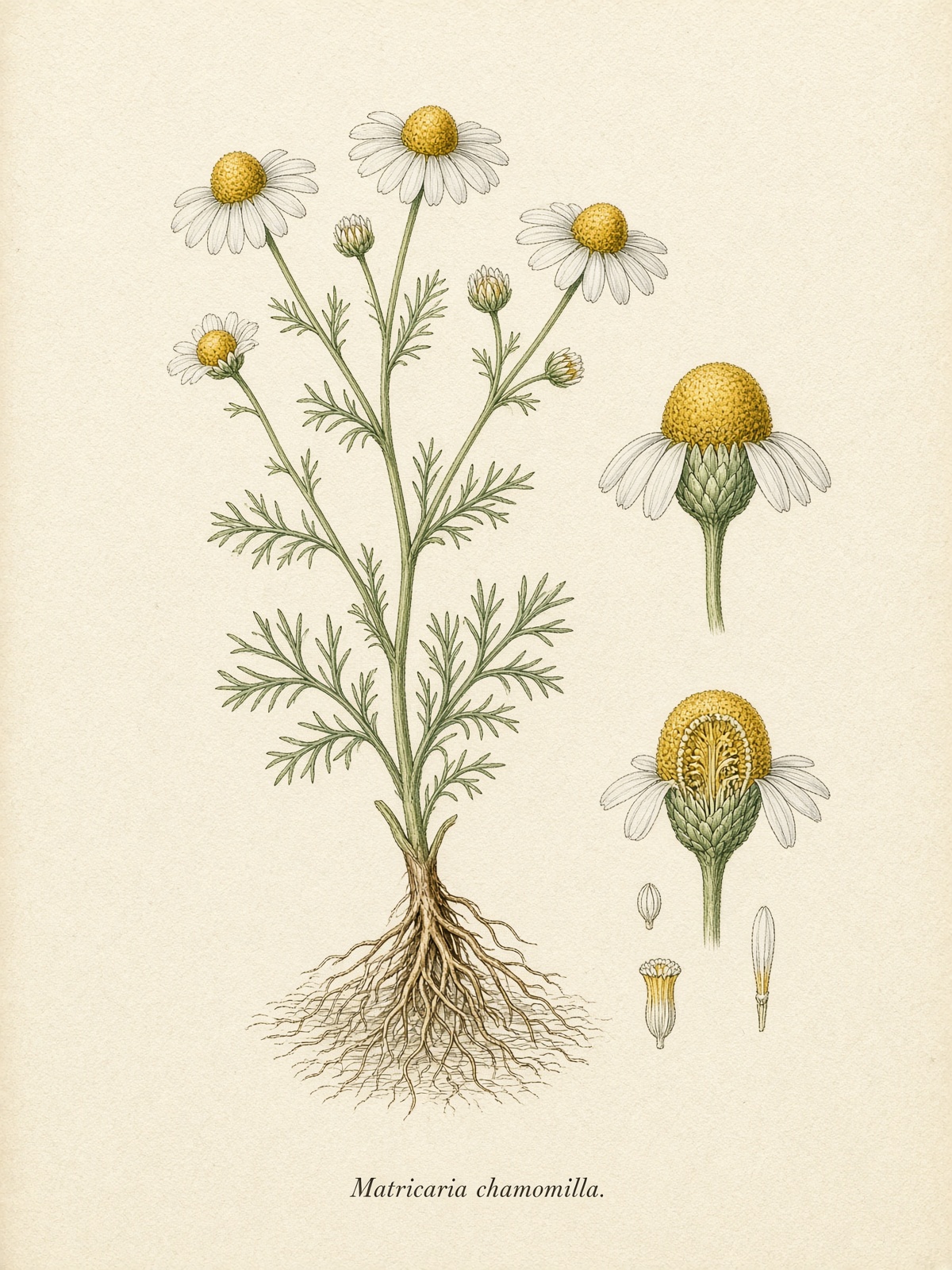
Chamomile
Matricaria chamomilla
Asteraceae
A small daisy used for centuries as an evening tea for restlessness and mild digestive cramp.
Culinary and herbal; widely sold as tea.
- Parts used
- Flower heads
- Traditional notes
- Evening restlessness · Mild digestive spasm after meals · Irritable infant colic (as a weak tea, under clinical guidance) · Topical compress for irritated skin
- Grow · USDA 6b
- Annual; sow after frost. Cool temperate climates. Direct-sow in early spring; press seed, do not bury (needs light). In work: Mar · Apr · May · Jun · Jul · Aug
- Harvest
- Pick fully open heads on dry mornings; dry in shade on screens.
- Press seed on the surface — it needs light to germinate.
- Lean soil. Rich beds make floppy stems and fewer flowers.
- Pick heads as they open on dry mornings; a midsummer cut often brings a second flush.
Safety
Asteraceae allergy First-trimester caution unless a clinician agrees
Companions
Plant with Cabbage, Onion.
Lore
Egyptians dedicated a daisy to the sun; medieval monks planted it in infirmary lawns so that to walk was to bruise medicine. The apple smell is why the Spanish still call it manzanilla — little apple — and why a pub in Spain can mean a pale sherry or a bedtime flower, depending on the hour.
The Herbarium — a teaching catalog, not a clinic. Traditional use is history, not a prescription. USDA 6b dates are a week either way, not a promise. Do not eat, drink, or harvest a plant you cannot name.