The Herbarium
Part IV · Fruit & vegetable
Herb. No. 217
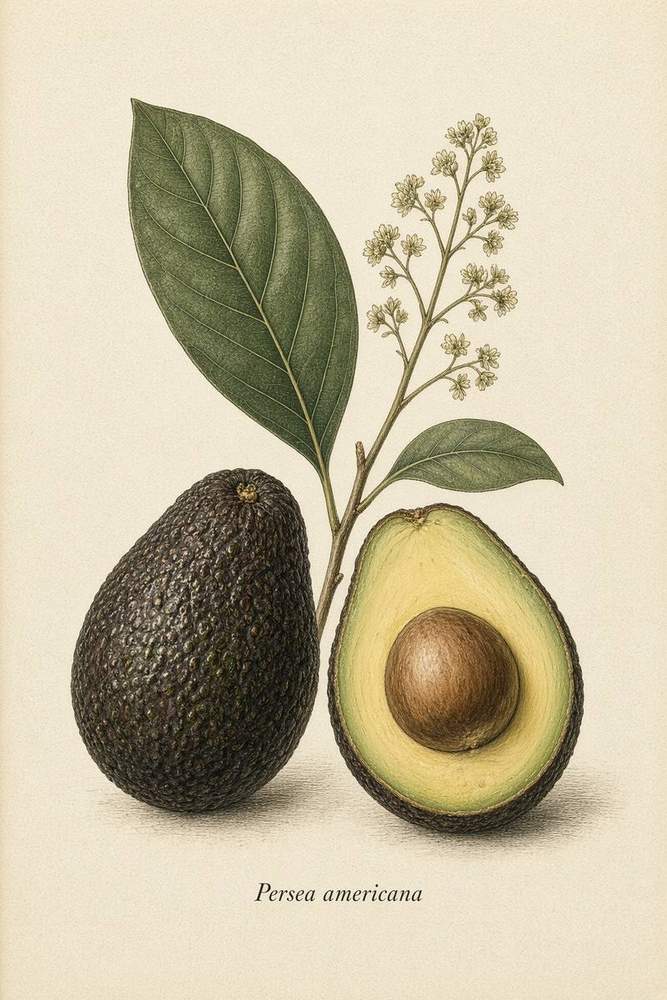
Avocado
Persea americana
Lauraceae
A Mesoamerican berry with a giant seed — fat as food, not a toast personality, and not a pit tea.
Ripe flesh is food. Leaves of some types and the pit are not a tea. The fruit is toxic to birds and some pets.
- Parts used
- Ripe flesh
- Traditional notes
- Kitchen fruit · Traditional Mesoamerican fat · A spread and a salad
- Grow · USDA 6b
- Tender tree, USDA 9–11. Mexican types take a little more cold than West Indian. A named graft if you want fruit you recognize. A pit is a houseplant, then maybe a tree. In work: Jan · Feb · Mar · Apr · May · Jun · Jul · Aug · Sep · Oct · Nov · Dec
- Harvest
- Mature green, then ripen indoors. They do not soften on the tree in any useful way.
- Hass will not come true from a grocery pit.
- A paper bag with a banana speeds a hard fruit.
Safety
The pit as a tea Avocado around some birds and livestock Known latex-fruit allergy
Lore
Nahuatl āhuacatl. Spanish aguacate. English spent a century calling it alligator pear. The Hass tree was a mail-carrier’s seedling in La Habra, 1926; almost every grocery avocado is its clone. The pit on toothpicks is a science-fair, not an orchard.
The Herbarium — a teaching catalog, not a clinic. Traditional use is history, not a prescription. USDA 6b dates are a week either way, not a promise. Do not eat, drink, or harvest a plant you cannot name.