The Herbarium
Part I · Medicinal herbs
Herb. No. 017
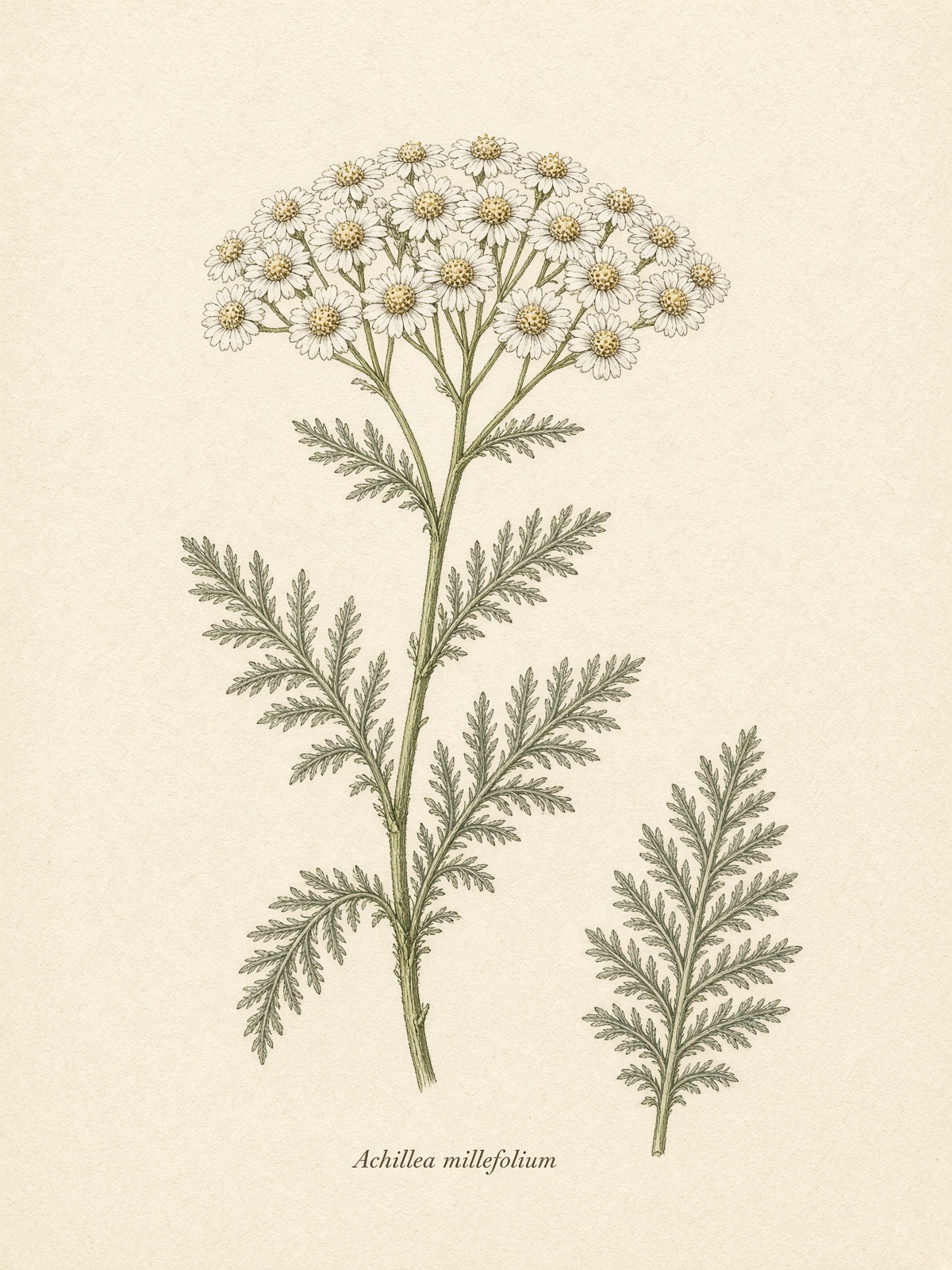
Yarrow
Achillea millefolium
Asteraceae
Achilles' woundwort — a bitter, aromatic styptic for fevers, cuts, and heavy moons.
Common wild and garden herb.
- Parts used
- Aerial parts · Leaf
- Traditional notes
- Feverish cold with dry skin · Minor bleeding · Heavy menstrual flow · Bitter before fatty meals
- Grow · USDA 6b
- Perennial, USDA 3–9 Division is easiest. Seed needs light. In work: May · Jun · Jul · Aug
- Harvest
- Tops in full flower. Leaves any time.
- Starve it. Rich soil makes floppy, pale yarrow.
- Cut the flowering stems for tea as they open; a second flush follows.
- Divide every few years or the clump dies out in the center.
Safety
Pregnancy Asteraceae allergy
Companions
Plant with Anise hyssop, Apple, Bee balm, Blueberry, Borage, Calendula.
Lookalikes
- Poison hemlock — Achillea is a flat, ferny aster, not an umbel. People still call any white roadside head ‘yarrow’ — and some of those heads are hemlock.
Lore
Achilles staunched wounds with it, hence Achillea. English names include soldier’s woundwort and nosebleed. The feathery leaf is a battlefield plant that later settled into a bitter digestive tea for villages that had run out of wars.
The Herbarium — a teaching catalog, not a clinic. Traditional use is history, not a prescription. USDA 6b dates are a week either way, not a promise. Do not eat, drink, or harvest a plant you cannot name.