The Herbarium
Part I · Medicinal herbs
Herb. No. 054
LegalGentle
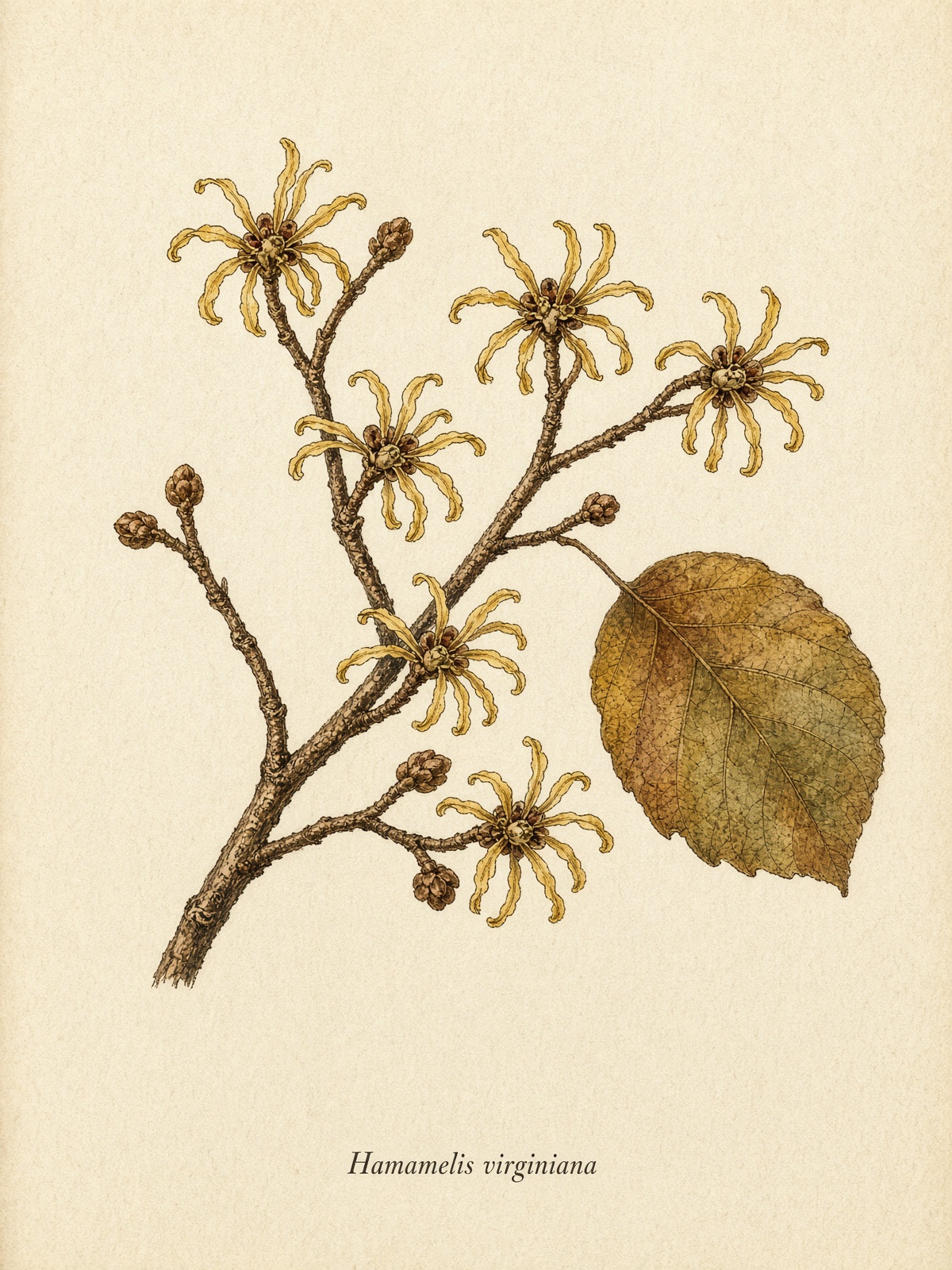
Witch hazel
Hamamelis virginiana
Hamamelidaceae
A winter-blooming shrub whose bark and leaf make the classic cooling astringent.
Distilled witch hazel is a common topical astringent. Alcohol-free versions exist for skin.
- Parts used
- Bark · Leaf · Twig
- Traditional notes
- Hemorrhoid compress · After-sun skin · Minor scrapes · Puffy eyes (dilute)
- Grow · USDA 6b
- Shrub, USDA 4–8 Nursery plants. Seed is slow. In work: Jun · Jul · Aug · Oct · Nov
- Harvest
- Leaf in summer; bark from prunings in autumn — never girdle.
- Woodland edge, acid leaf mold, patience for the winter bloom.
- Harvest twigs from prunings after flowering, never a girdle.
- Commercial distilled witch hazel is milder than a home bark decoction.
Safety
Open deep wounds Drinking strong bark decoctions
Lore
Hamamelis blooms in winter, petals like scraps of yellow paper. Native nations of the east used the bark; drugstore astringent is steam-distilled and still smells of the woods behind the pharmacy.
The Herbarium — a teaching catalog, not a clinic. Traditional use is history, not a prescription. USDA 6b dates are a week either way, not a promise. Do not eat, drink, or harvest a plant you cannot name.