The Herbarium
Part I · Medicinal herbs
Herb. No. 149
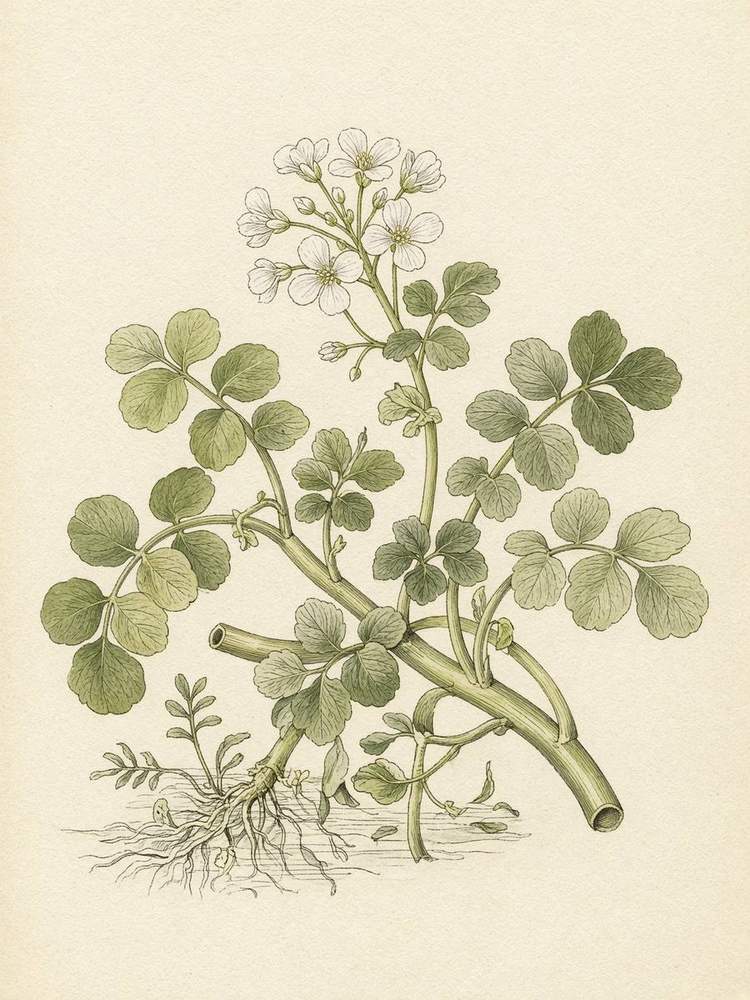
Watercress
Nasturtium officinale
Brassicaceae
The peppery brook green — a mustard that lives in clean moving water, and a Victorian breakfast plate.
Culinary aquatic green. Wild watercress can carry liver fluke in grazing country — grow it, or buy it, do not graze a sheep ditch.
- Parts used
- Leaf and stem
- Traditional notes
- Kitchen salad and soup · Traditional spring tonic · Breakfast plate folklore
- Grow · USDA 6b
- Cool-season perennial aquatic, USDA 5–10 as a crop Cuttings root in water in days. Seed works in a tray. In work: Mar · Apr · May · Sep · Oct · Nov
- Harvest
- Cut-and-come tips. Keep it from flowering if you want leaf.
- A cat-box-sized tray of clean water is a crop.
- Heat makes it bitter and seedy.
Safety
Wild cress from grazing water Mustard-family allergy
Lookalikes
- Water hemlock — A peppery brook green and a convulsant share the same water. One is a mustard. The other is Cicuta.
Lore
Xenophon fed it to the Persians for vigor. London’s working breakfast was a bunch of it in paper, sold by watercress girls from the beds of Hampshire and Hertfordshire. Hippocrates already has a cress. The Victorian ‘poor man’s bread’ was this pepper, a roll, and nothing else.
The Herbarium — a teaching catalog, not a clinic. Traditional use is history, not a prescription. USDA 6b dates are a week either way, not a promise. Do not eat, drink, or harvest a plant you cannot name.