The Herbarium
Part VII · Toxic
Herb. No. 180
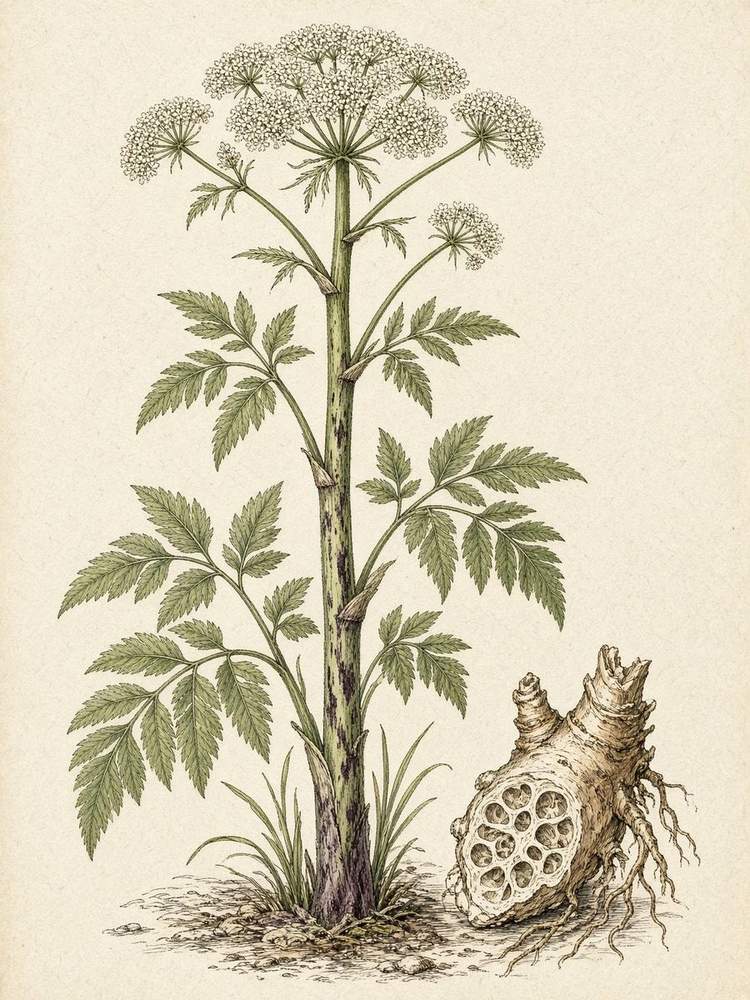
Water hemlock
Cicuta maculata
Apiaceae
The wetland umbel that looks like parsley and kills like a seizure — a teaching plate so fennel, dill, and watercress have a named opposite.
Poison-garden teaching plate. Often called the most violently poisonous plant in North America. No harvest, no taste-test, no wild carrot experiments.
- Parts used
- None. Teaching plate only.
- Traditional notes
- None that this folio will repeat as practice
- Habitat only
- Marshes, ditches, wet meadows of North America. Purple-streaked stems, compound toothed leaflets, white umbels, chambered yellow oil in the root when cut. Habitat map so you can leave it.
- Chambered root with yellow oily liquid: stop.
- This is not poison hemlock (Conium) and not water parsnip. You do not need to be sure of those if you are already walking away.
- Wetland umbel you cannot name to species: not supper.
Safety
All use All foraging of unnamed wetland umbels
Lookalikes
- Parsley — Cicuta is the deadliest plant in North American ditches. A wet-ground parsley look-alike has killed people who wanted a garnish.
- Watercress — A peppery brook green and a convulsant share the same water. One is a mustard. The other is Cicuta.
Lore
Cicuta is the plant Socrates is sometimes mis-credited with; his cup was Conium. Water hemlock is worse in a hurry. American foraging deaths still cluster on this genus. The old joke about wild carrot — ‘Queen Anne’s lace has a hairy stem’ — is not enough here. If it stands in standing water and you are not a botanist, it is not lunch.
The Herbarium — a teaching catalog, not a clinic. Traditional use is history, not a prescription. USDA 6b dates are a week either way, not a promise. Do not eat, drink, or harvest a plant you cannot name.