The Herbarium
Part I · Medicinal herbs
Herb. No. 159
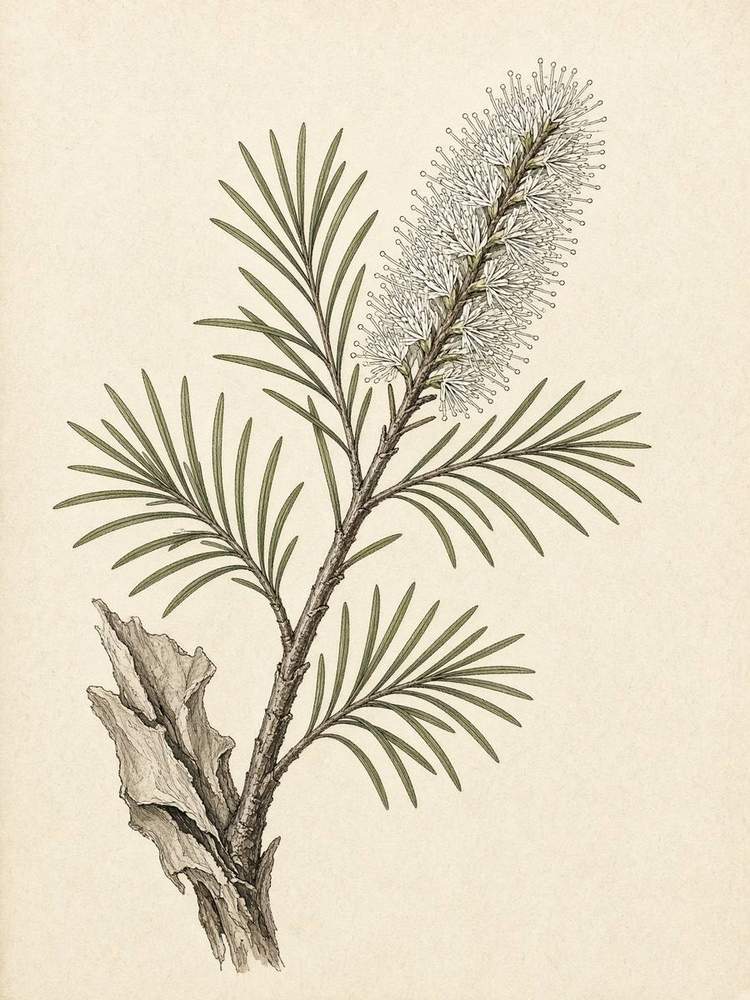
Tea tree
Melaleuca alternifolia
Myrtaceae
Paperbark of New South Wales — a topical oil plant, famously not the tea camellia, and not a beverage.
Essential oil is a topical antiseptic, not a tea and not a gargle to swallow. The leaf is not Camellia.
- Parts used
- Leaf (distilled oil, topical)
- Traditional notes
- Topical for fungal skin folklore · Minor cuts as a labeled oil
- Grow · USDA 6b
- Wetland shrub, USDA 9–11; pot north A nursery plant. Distillation is an industry, not a saucepan. In work: Jan · Feb · Mar · Apr · May · Jun · Jul · Aug · Sep · Oct · Nov · Dec
- Harvest
- Leaf for a still if you are licensed; most people buy the bottle.
- The bottle is the honest harvest.
- Tea tree is a name, not an invitation to the kettle.
Safety
Internal use of the oil Cats (essential oils) Undiluted oil on infants
Lookalikes
- Tea — Melaleuca oil is not Camellia sinensis. A drop of tea-tree in a cup is a mucosa problem, not a breakfast.
Lore
Bundjalung people of New South Wales used crushed leaf on skin long before a Sydney factory distilled it. Captain Cook’s men made a grog of it and complained. The 1920s Australian chemist A. R. Penfold put the oil into modern pharmacy. The ‘tea’ in the name is a sailor’s joke that outlived the brew.
The Herbarium — a teaching catalog, not a clinic. Traditional use is history, not a prescription. USDA 6b dates are a week either way, not a promise. Do not eat, drink, or harvest a plant you cannot name.