The Herbarium
Part I · Medicinal herbs
Herb. No. 136
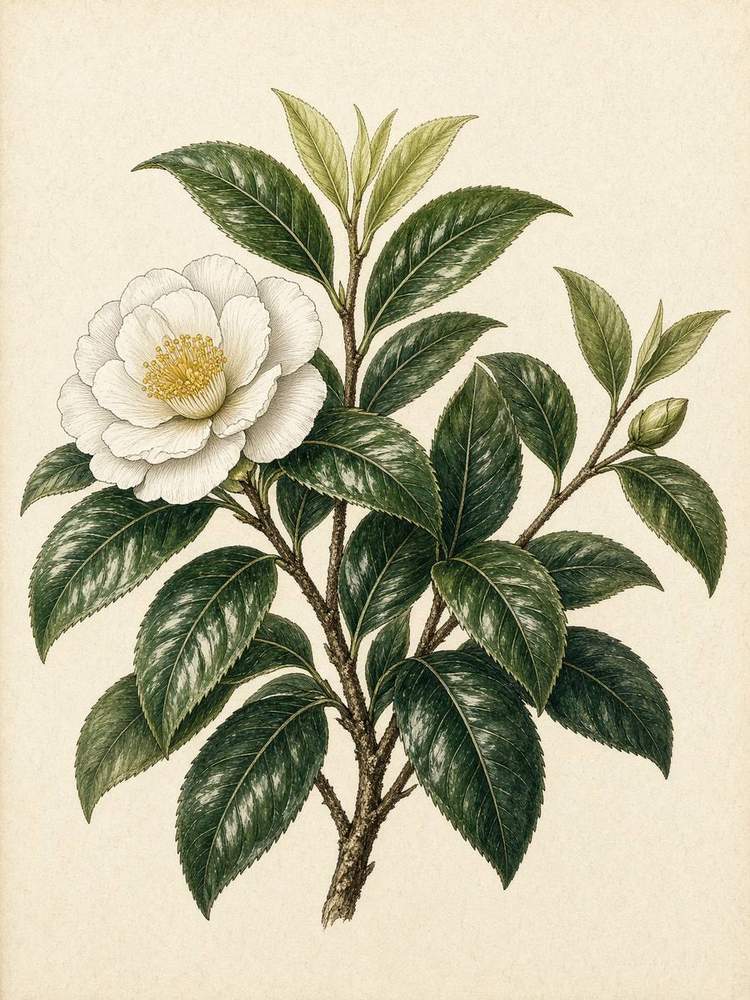
Tea
Camellia sinensis
Theaceae
The camellia that filled the kettle — one shrub, a thousand names, and a caffeine cup older than the porcelain.
Culinary leaf. Green, black, oolong, and white are one species at different processing.
- Parts used
- Young leaf and bud
- Traditional notes
- Wakefulness · After a meal · Traditional cold and head folklore
- Grow · USDA 6b
- Evergreen shrub, USDA 7–9 in a sheltered acid bed; pot north A named plant. Seed is slow. In work: Apr · May · Jun · Jul · Aug · Sep
- Harvest
- The top two leaves and a bud, several flushes in a mild climate.
- Think camellia, not mint. Acid soil or a pot.
- Process the leaf the same day or it composts.
Safety
Insomnia if you are caffeine-sensitive Late pregnancy in large amounts without advice
Lookalikes
- Tea tree — Melaleuca oil is not Camellia sinensis. A drop of tea-tree in a cup is a mucosa problem, not a breakfast.
Lore
A Chinese emperor’s wind blew leaf into the pot, says the story, and the drink was an accident that lasted 3,000 years. Lu Yu wrote the first tea book in the 8th century. Britain lost a colony arguing about a tax on it. All the colors in the tin are still this one camellia.
The Herbarium — a teaching catalog, not a clinic. Traditional use is history, not a prescription. USDA 6b dates are a week either way, not a promise. Do not eat, drink, or harvest a plant you cannot name.