The Herbarium
Part IV · Fruit & vegetable
Herb. No. 189
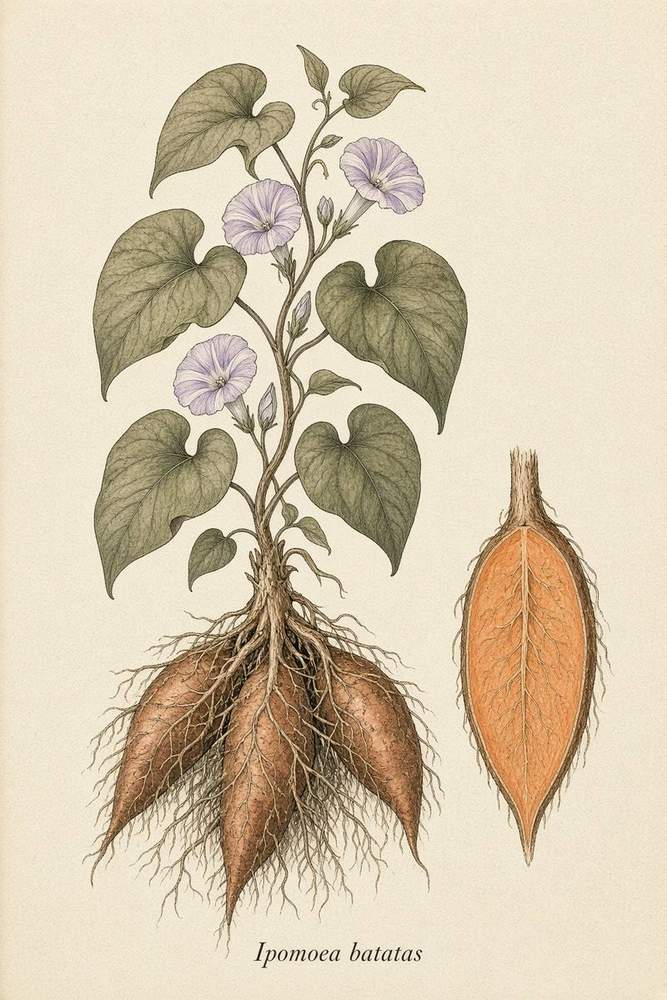
Sweet potato
Ipomoea batatas
Convolvulaceae
A tropical morning-glory grown for its sweet orange (or white, or purple) storage root — not a yam, not a potato.
Cooked tuber is food. This is not a Dioscorea yam, and it is not a nightshade potato.
- Parts used
- Storage root, cooked
- Traditional notes
- Staple starch · Kitchen sweet · Traditional Southern and Caribbean table
- Grow · USDA 6b
- Tropical perennial grown as a tender annual. USDA 8–11 in ground; slips north. Slips (sprouted shoots), not seed. A grocery tuber will sprout in a jar. In work: May · Jun · Jul · Aug · Sep · Oct
- Harvest
- Before frost. A nicked root does not store.
- Cure 10 days warm and humid or they will not keep.
- Frost blackens the vine and can ruin the root.
- A raised bed in clay country.
Safety
Raw juice as a cleanse Confusing it with a toxic lookalike morning-glory seed
Companions
Plant with Corn.
Lookalikes
- Cassava — Two tropical roots. One is a breakfast. Bitter cassava is cyanogenic until it is prepared correctly — not a casual swap.
Lore
The word yam on a can in the United States is a marketing error. Enslaved West Africans already knew true yams (Dioscorea); the Ipomoea they were given in the South was a different plant that they made into a cuisine anyway. Polynesians carried it across the Pacific before Columbus. The orange pie is a later, American sweetness.
The Herbarium — a teaching catalog, not a clinic. Traditional use is history, not a prescription. USDA 6b dates are a week either way, not a promise. Do not eat, drink, or harvest a plant you cannot name.