The Herbarium
Part I · Medicinal herbs
Herb. No. 125
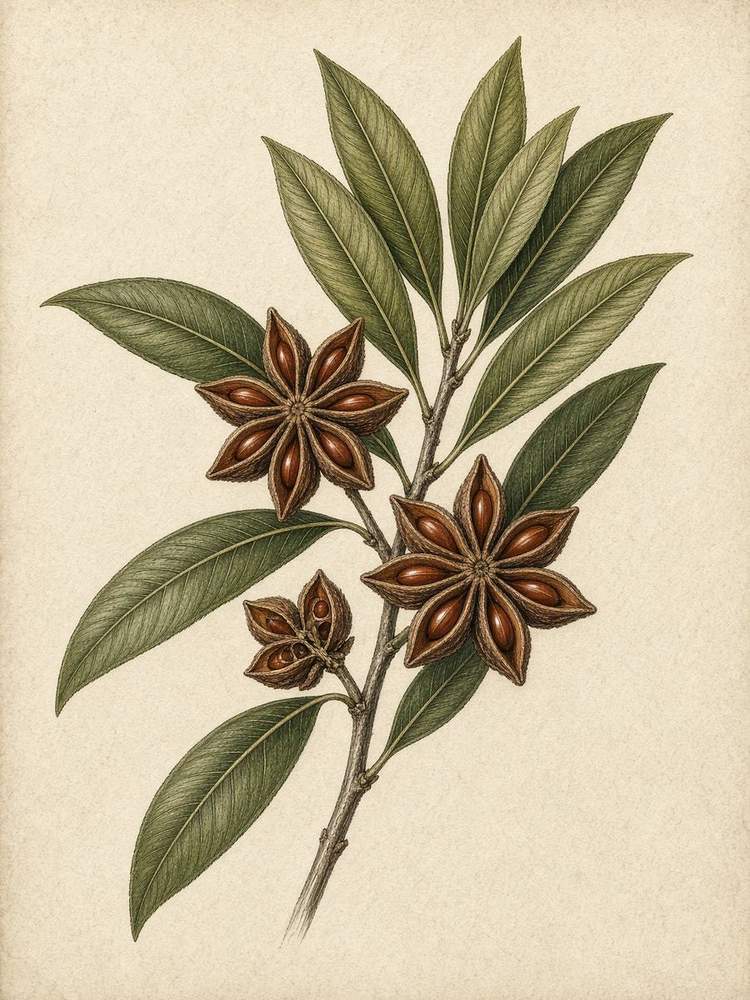
Star anise
Illicium verum
Schisandraceae
The eight-pointed spice of pho and five-spice — a licorice star with a lookalike that does not belong in a pot.
Culinary Chinese star anise (I. verum). Japanese star anise (I. anisatum) is toxic — buy named, food-grade spice.
- Parts used
- Dried fruit
- Traditional notes
- Kitchen spice · After a fatty braise · Traditional cold folklore in a kitchen pot
- Grow · USDA 6b
- Subtropical evergreen, USDA 8–10 in a mild winter; greenhouse north A nursery I. verum if you have the climate. Most kitchens buy the star. In work: Jan · Feb · Mar · Apr · May · Jun · Jul · Aug · Sep · Oct · Nov · Dec
- Harvest
- Unripe-to-ripe fruits, dried. A tree takes years.
- Buy from a grocer, not a decorative shrub you cannot name.
- Japanese star anise has more points, no sweet smell, and no place in a pot.
- One star is a meal; five is a perfume factory.
Safety
Any star anise not sold as food Infant ‘star anise tea’ from an unknown bag
Lookalikes
- Anise — Illicium and Pimpinella share a flavour and not a family. Japanese star anise is a toxic cousin of the Chinese spice — buy named culinary star anise, never a wild Illicium.
Lore
The Chinese name is bājiǎo, eight horns. Tamiflu’s first industrial route started from shikimic acid in this fruit, which is how a soup spice briefly became a strategic crop. Victorian Europe met it as a cheaper stand-in for true aniseed, then learned to like the star for itself.
The Herbarium — a teaching catalog, not a clinic. Traditional use is history, not a prescription. USDA 6b dates are a week either way, not a promise. Do not eat, drink, or harvest a plant you cannot name.