The Herbarium
Part I · Medicinal herbs
Herb. No. 148
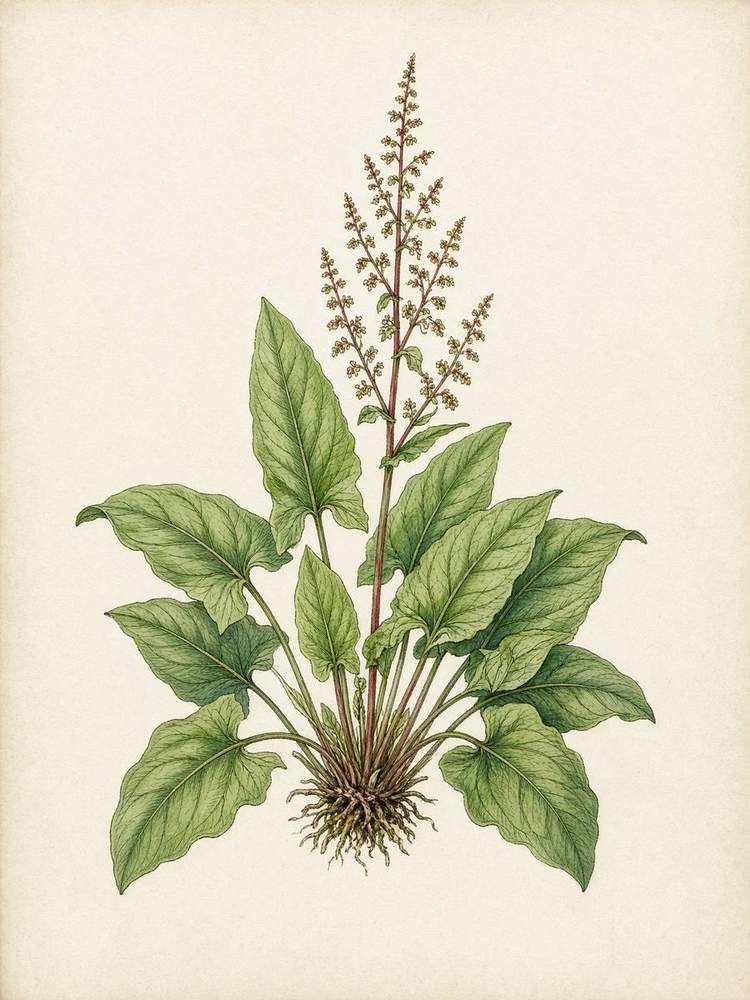
Sorrel
Rumex acetosa
Polygonaceae
The lemon of the temperate garden — arrow leaves that sharpen soup and fish, with a French pedigree.
Culinary leaf. High in oxalic acid — a food green, not a daily kilo. Sheep’s sorrel is a smaller cousin.
- Parts used
- Leaf
- Traditional notes
- Kitchen sour green · With fish and egg · Traditional cooling spring food
- Grow · USDA 6b
- Perennial, USDA 3–8 Seed or a division. A clump for years. In work: Mar · Apr · May · Jun · Sep · Oct
- Harvest
- Outer leaves, cut-and-come, spring to frost. Cut back when it bolts.
- French and garden types are milder than wild sheep’s sorrel.
- A second flush after a midsummer chop.
Safety
Kidney-stone oxalate caution in huge daily amounts
Lore
The French made it a sauce; the English put it in a pie with sugar and called it a tart. The Latin acetosa is ‘the vinegary one.’ Medieval herbals used it as a scurvy green, which is not wrong — it is a spring vitamin with a sour joke attached. Copper pans turn it an unfortunate gray; the old kitchens knew.
The Herbarium — a teaching catalog, not a clinic. Traditional use is history, not a prescription. USDA 6b dates are a week either way, not a promise. Do not eat, drink, or harvest a plant you cannot name.