The Herbarium
Part I · Medicinal herbs
Herb. No. 126
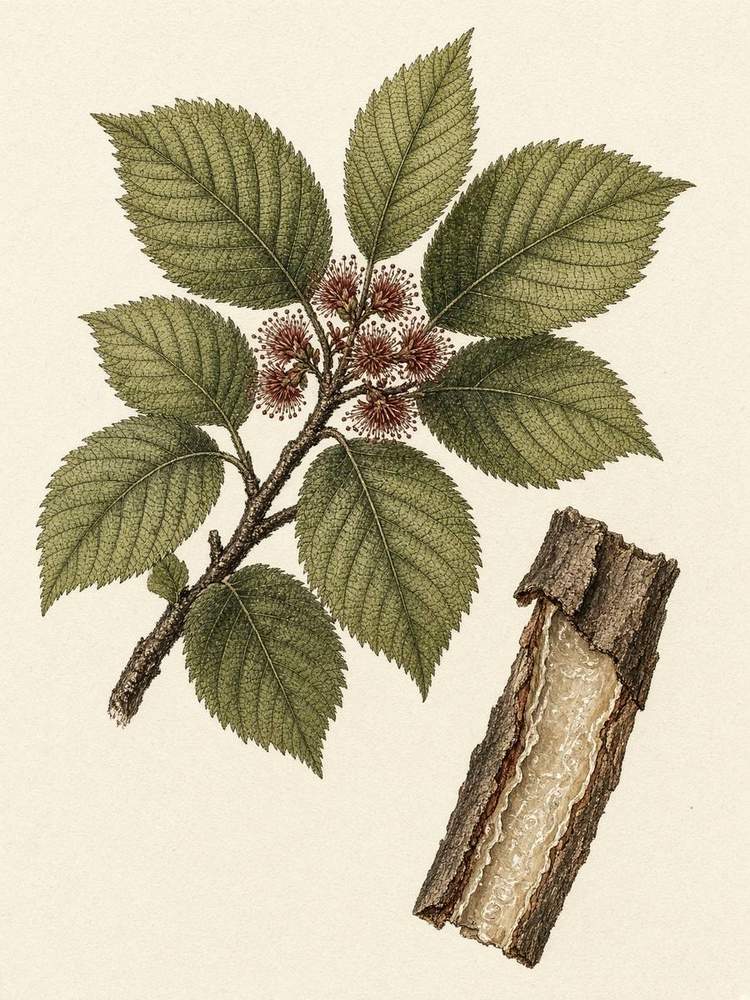
Slippery elm
Ulmus rubra
Ulmaceae
The mucilaginous inner bark of an American elm — a slippery tea for a raw throat and a raw gut.
Inner-bark soothe from cultivated or ethically sourced trees. Wild stands have been hit by harvest and by Dutch elm disease — do not strip a roadside elm.
- Parts used
- Inner bark (powder)
- Traditional notes
- Raw dry cough · Sore throat · Gastric irritation · A bland recovery food
- Grow · USDA 6b
- Tree, USDA 3–9 A nursery U. rubra. You are planting for a decade, not a tin. In work: Mar · Apr · May
- Harvest
- Do not strip wild trees. Buy cultivated inner bark. A home tree is a specimen, not a mill.
- Plant it for the century. Buy the powder for the cupboard.
- Dutch elm disease still exists. Diversity in the planting matters.
- Mix powder with cold water first or it clumps into paste.
Safety
Wild-stripped bark Obstruction if you eat it dry by the spoon
Lore
Indigenous nations of the east used the inner bark as food and as a wound poultice; settlers wrote it into every domestic book as ‘elm food’ for invalids. The 19th-century Eclectics put it on almost every raw surface. Dutch elm disease later made the standing tree rarer than the lozenge aisle, which is the wrong way around.
The Herbarium — a teaching catalog, not a clinic. Traditional use is history, not a prescription. USDA 6b dates are a week either way, not a promise. Do not eat, drink, or harvest a plant you cannot name.