The Herbarium
Part I · Medicinal herbs
Herb. No. 130
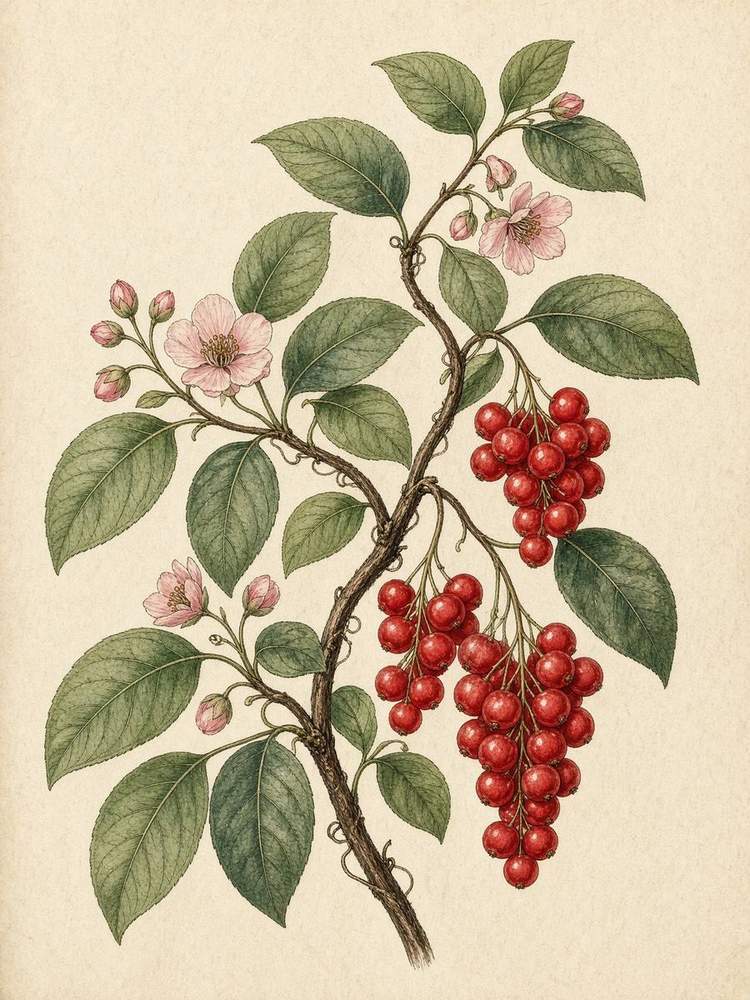
Schisandra
Schisandra chinensis
Schisandraceae
The five-flavor berry of Chinese tonic medicine — sour, sweet, bitter, pungent, and salty in one hanging cluster.
Culinary-tonic berry (wǔ wèi zǐ, five-flavor fruit). A sour-berry tea, not a candy.
- Parts used
- Ripe berry
- Traditional notes
- Fatigue · Dry cough folklore · Traditional astringent tonic · Restless overwork
- Grow · USDA 6b
- Woody vine, USDA 4–8 Named male and female, or a self-fertile cultivar. Seed needs cold. In work: Apr · May · Aug · Sep · Oct
- Harvest
- Ripe red clusters in late summer to autumn. Dry or freeze.
- Two vines unless the tag says self-fertile. This is not a rumor.
- A trellis or a small tree. It climbs.
- Birds vote first. Net if you want the five flavors.
Safety
Acute feverish illness in some traditional systems Pregnancy without advice GERD if sour is a problem
Lore
Wǔ wèi zǐ means five-flavor fruit, and the Chinese materia medica treats the berry as a gatherer of scattered qi. Hunters in the taiga were said to carry it against fatigue. Soviet researchers later studied it as they did eleuthero — another cold-forest tonic that arrived in the West with a lab coat over an old name.
The Herbarium — a teaching catalog, not a clinic. Traditional use is history, not a prescription. USDA 6b dates are a week either way, not a promise. Do not eat, drink, or harvest a plant you cannot name.