The Herbarium
Part IV · Fruit & vegetable
Herb. No. 188
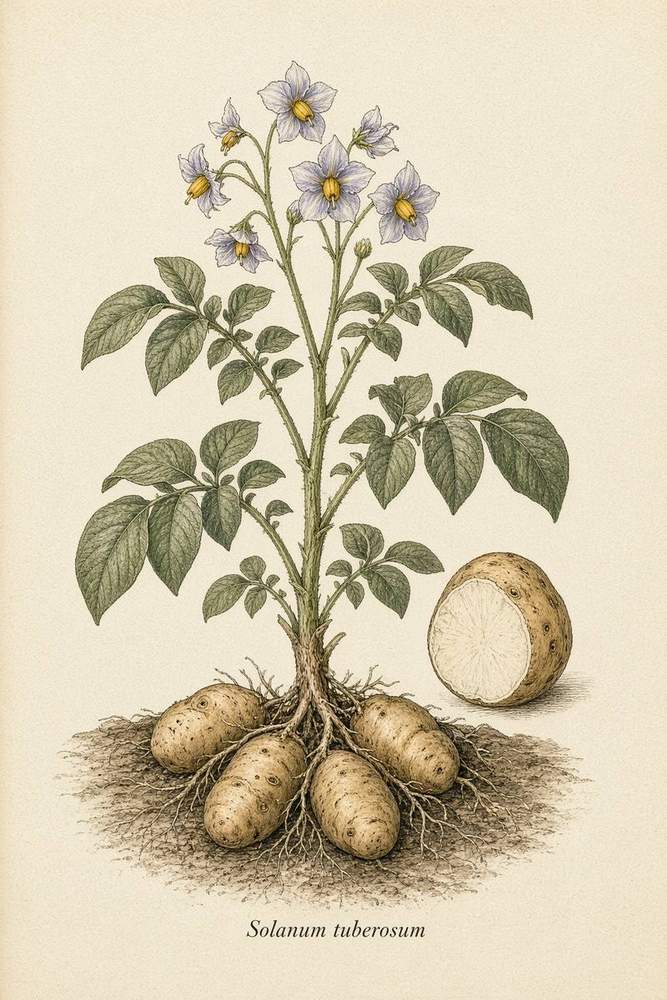
Potato
Solanum tuberosum
Solanaceae
The Andean tuber that feeds the world — and a nightshade whose green skin and sprouts are not supper.
Cooked tuber is food. Green skin, sprouts, and all foliage are solanine — compost them, do not eat them.
- Parts used
- Mature tuber, cooked
- Traditional notes
- Staple starch · Kitchen · Traditional peasant food of two hemispheres
- Grow · USDA 6b
- Cool-season tuber. USDA 3–9 as an annual. Certified seed potatoes, not a grocery sprouter if blight is a worry. In work: Mar · Apr · May · Aug · Sep · Oct
- Harvest
- New potatoes when flowers open; maincrop when haulms yellow.
- Hill soil over the stems so tubers stay dark.
- Green means light got in. Do not eat the green.
- Cure a week in shade before the winter box.
Safety
Green or sprouted tubers in quantity Foliage and fruit Raw potato as a juice fad
Companions
Plant with Cabbage, Calendula, Dog rose, French marigold, Green bean, Horseradish.
Keep apart from Cucumber, Eggplant, Pumpkin, Raspberry leaf, Sunflower, Tomato.
Lore
Quechua papa. The Spanish took it; the Irish made it a fate. The 1840s blight was a pathogen plus a monoculture. Andean farmers already kept hundreds of varieties at altitude. A russet in a bag is one vote. The leaf still tells you it is a nightshade.
The Herbarium — a teaching catalog, not a clinic. Traditional use is history, not a prescription. USDA 6b dates are a week either way, not a promise. Do not eat, drink, or harvest a plant you cannot name.