The Herbarium
Part II · Medicinal fungi
Herb. No. 131
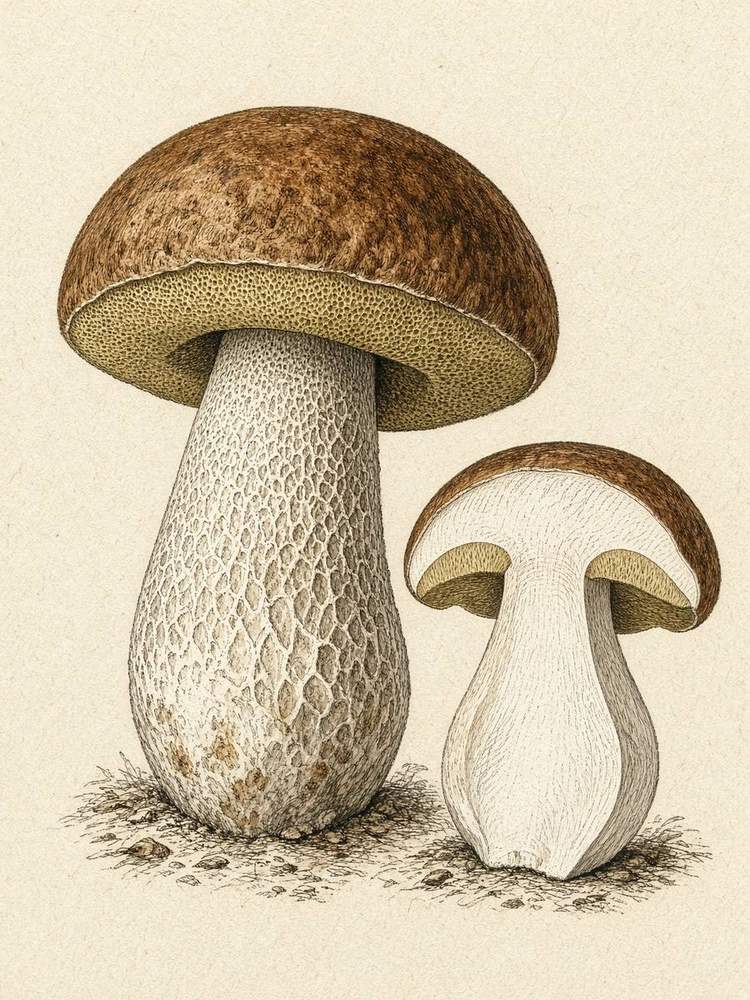
Porcini
Boletus edulis
Boletaceae
The king bolete — a bun-capped woodland mushroom whose sponge pores, not gills, are the first ID lesson.
Wild edible when correctly identified. Boletes include bitter and toxic lookalikes. Not a home-cultivated block crop.
- Parts used
- Fruiting body
- Traditional notes
- Kitchen (correctly identified) · Traditional woodland food · Broth of recovery
- Habitat only
- Mycorrhizal with spruce, pine, fir, beech, and birch in temperate woods. Late summer to autumn, on soil under trees — not on logs. Habitat map, not a pin for this year’s flush.
- Pores, not gills. A bun cap. A stout stem, often with a fine white net.
- Taste a scrap: true porcini is mild; the bitter bolete is instantly wrong — spit it.
- If it bruises blue, you are not holding B. edulis. Walk on.
Safety
Any bolete you cannot name Raw wild mushrooms Blue-staining or bitter specimens
Lore
Italians named it porcino, little pig, for the fat stem. The French cépe and the German Steinpilz are the same hunger. It has never been farmed in any honest kitchen sense, which is why a dry kilo still costs like a small celebration. Old men with sticks still beat the blogs to the flush.
The Herbarium — a teaching catalog, not a clinic. Traditional use is history, not a prescription. USDA 6b dates are a week either way, not a promise. Do not eat, drink, or harvest a plant you cannot name.