The Herbarium
Part IV · Fruit & vegetable
Herb. No. 213
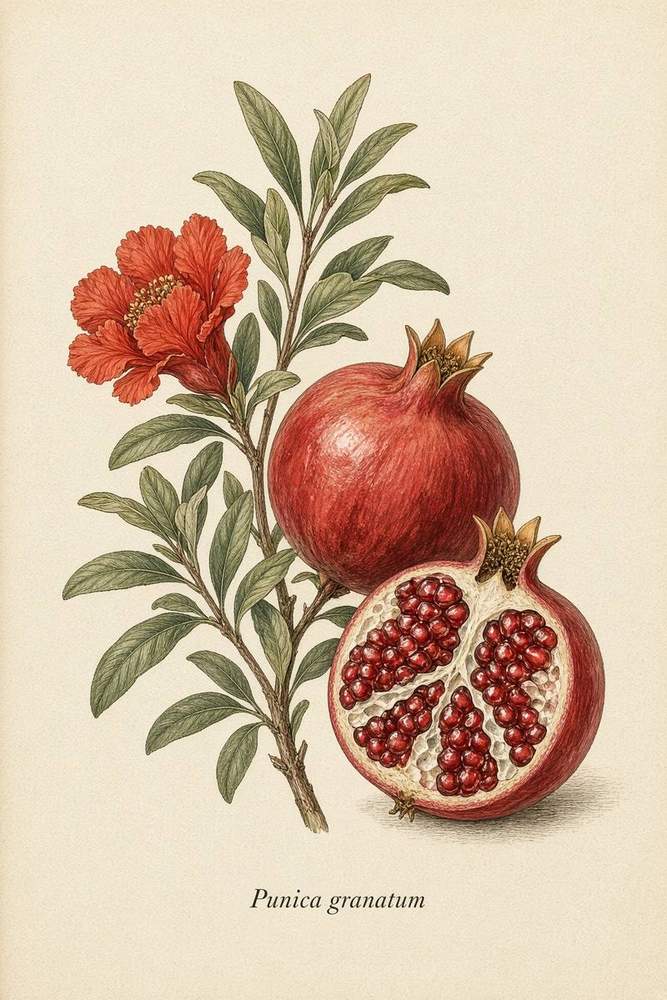
Pomegranate
Punica granatum
Lythraceae
A leathery fruit of the dry Mediterranean, packed with arils — juice and seed, not a rind tea.
Arils are food. The bitter rind is a traditional astringent, not a snack and not a daily tea.
- Parts used
- Arils
- Traditional notes
- Kitchen fruit · Juice · Traditional ceremonial fruit
- Grow · USDA 6b
- Shrub, USDA 8–11; a pot north, or a long-season wall A named cutting or a nursery plant. ‘Wonderful’ is the usual juice type. In work: Sep · Oct · Nov
- Harvest
- When the rind is fully colored and often splits. They store cool a while.
- Heat to ripen sugar.
- A split fruit is ripe, not ruined — bring it in before the bees.
Safety
Rind as a daily tea Known pomegranate allergy (rare)
Lore
The Spanish city Granada is the fruit. Greek Persephone ate the seeds and had to stay in the underworld — a seasonal myth that still reads as a harvest. The Hebrew rimmon and the Quranic rumman are household words. Grenadine used to be this juice; now it is often something else. Buy the bottle that admits it.
The Herbarium — a teaching catalog, not a clinic. Traditional use is history, not a prescription. USDA 6b dates are a week either way, not a promise. Do not eat, drink, or harvest a plant you cannot name.