The Herbarium
Part VII · Toxic
Herb. No. 177
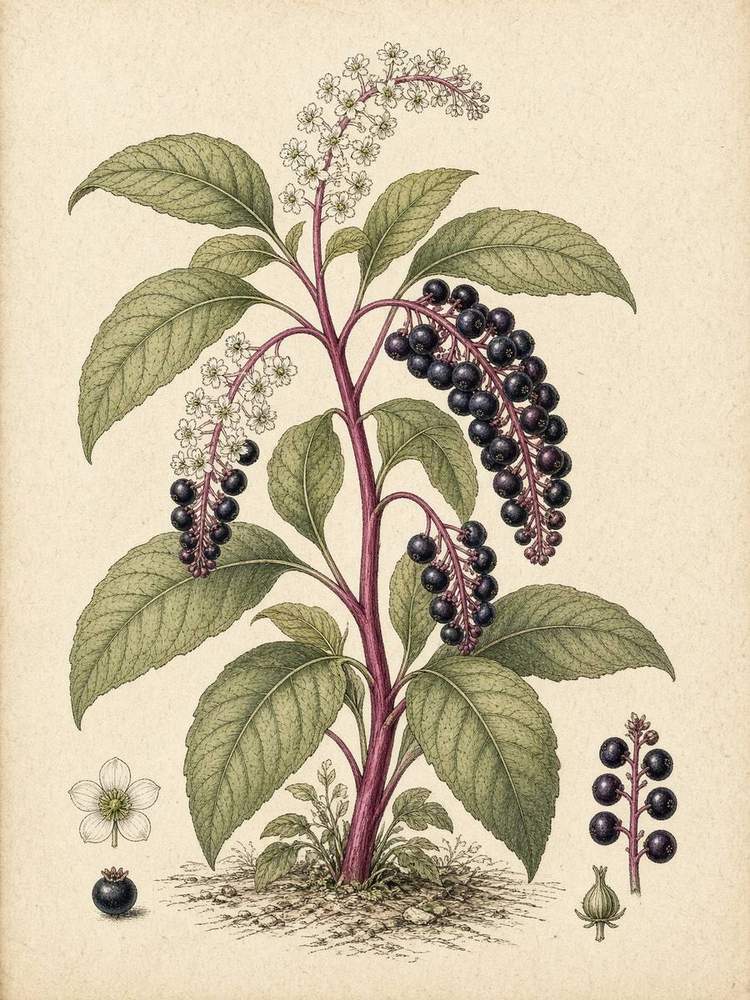
Pokeweed
Phytolacca americana
Phytolaccaceae
Magenta stems and ink-dark berries — an American roadside that looks like food and is a poison-garden lesson.
Poison-garden teaching plate. All parts are toxic. Folk ‘poke sallet’ of young shoots is a specialist, much-boiled tradition that still sends people to the clinic. Do not try it from this folio.
- Parts used
- None for self-care.
- Traditional notes
- Historical poke sallet — obsolete as a home experiment · Berry ink folklore
- Grow · USDA 6b
- Perennial, USDA 4–9. A common American weed. If you grow it to learn it, label it. Remove berry racemes if children visit. In work: Jul · Aug · Sep
- Harvest
- Do not harvest for food or medicine.
- Magenta stem, hanging white flowers, black berries. Remember the picture.
- Birds sow it. You do not have to.
- Poke sallet is a museum recipe, not a weekend project.
Safety
All unsupervised internal use Children and the berries
Lookalikes
- Elderberry — Purple-black berries on red stems look like a pie fruit. Pokeweed is a purge. Elder is a sambucus, and even that wants cooking.
Lore
Pokeberry ink wrote letters in the American 19th century and stained a thousand white shirts. ‘Poke sallet’ is a spring hunger food with a ritual of boiling that folklore treated as a spell and toxicology treats as incomplete. The root was an old emetic, which is to say a poisoning with a job. Leave it to the birds.
The Herbarium — a teaching catalog, not a clinic. Traditional use is history, not a prescription. USDA 6b dates are a week either way, not a promise. Do not eat, drink, or harvest a plant you cannot name.