The Herbarium
Part IV · Fruit & vegetable
Herb. No. 218
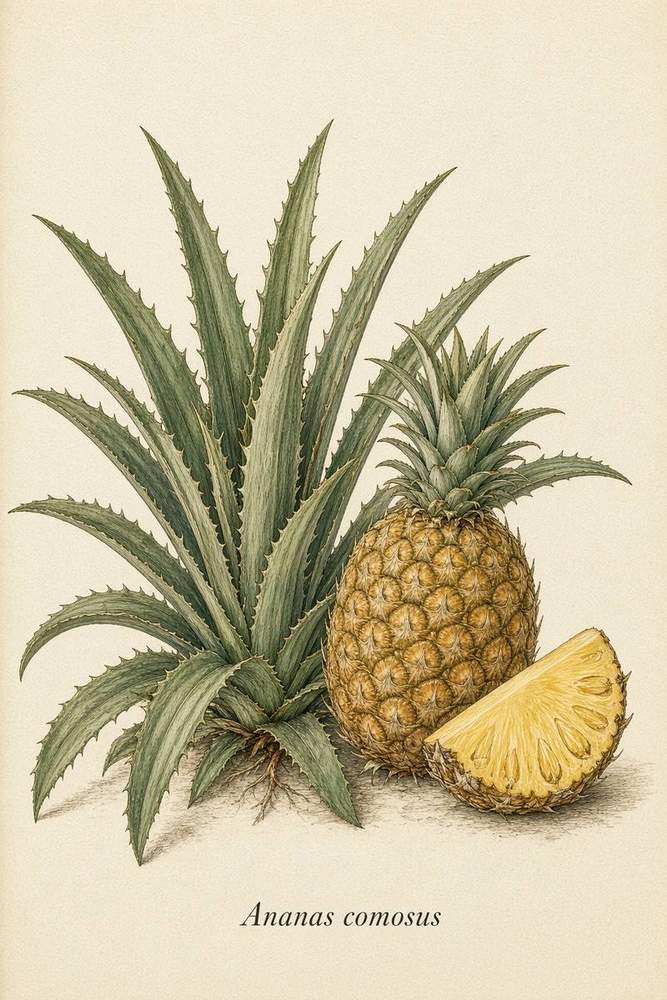
Pineapple
Ananas comosus
Bromeliaceae
A South American bromeliad that wears a crown — a ripe yellow flesh, and a core that is fiber, not a cleanse.
Ripe flesh is food. The bromelain in raw juice can bother the mouth. Core and skin are kitchen scraps, not a miracle tea.
- Parts used
- Ripe flesh
- Traditional notes
- Kitchen fruit · Traditional tropical fruit · A meat marinade (bromelain)
- Grow · USDA 6b
- Tropical perennial, USDA 10–11; a sunny pot north A crown twisted off a ripe fruit, dried a day, potted. In work: Jan · Feb · Mar · Apr · May · Jun · Jul · Aug · Sep · Oct · Nov · Dec
- Harvest
- When the base yellows and it smells like pineapple from a foot away.
- A crown is easy; a fruit is a climate.
- Smell, not color alone.
Safety
Raw juice on a wrecked mouth Known pineapple allergy
Lore
Tupi nanas, excellent fruit. The English pineapple is a pine cone that disappointed a botanist. Caribbean Indigenous people already used it. European hothouses grew it as a status object in the 18th century — a single fruit rented for a party. Hawaii’s canning industry is a later, corporate chapter.
The Herbarium — a teaching catalog, not a clinic. Traditional use is history, not a prescription. USDA 6b dates are a week either way, not a promise. Do not eat, drink, or harvest a plant you cannot name.