The Herbarium
Part I · Medicinal herbs
Herb. No. 002
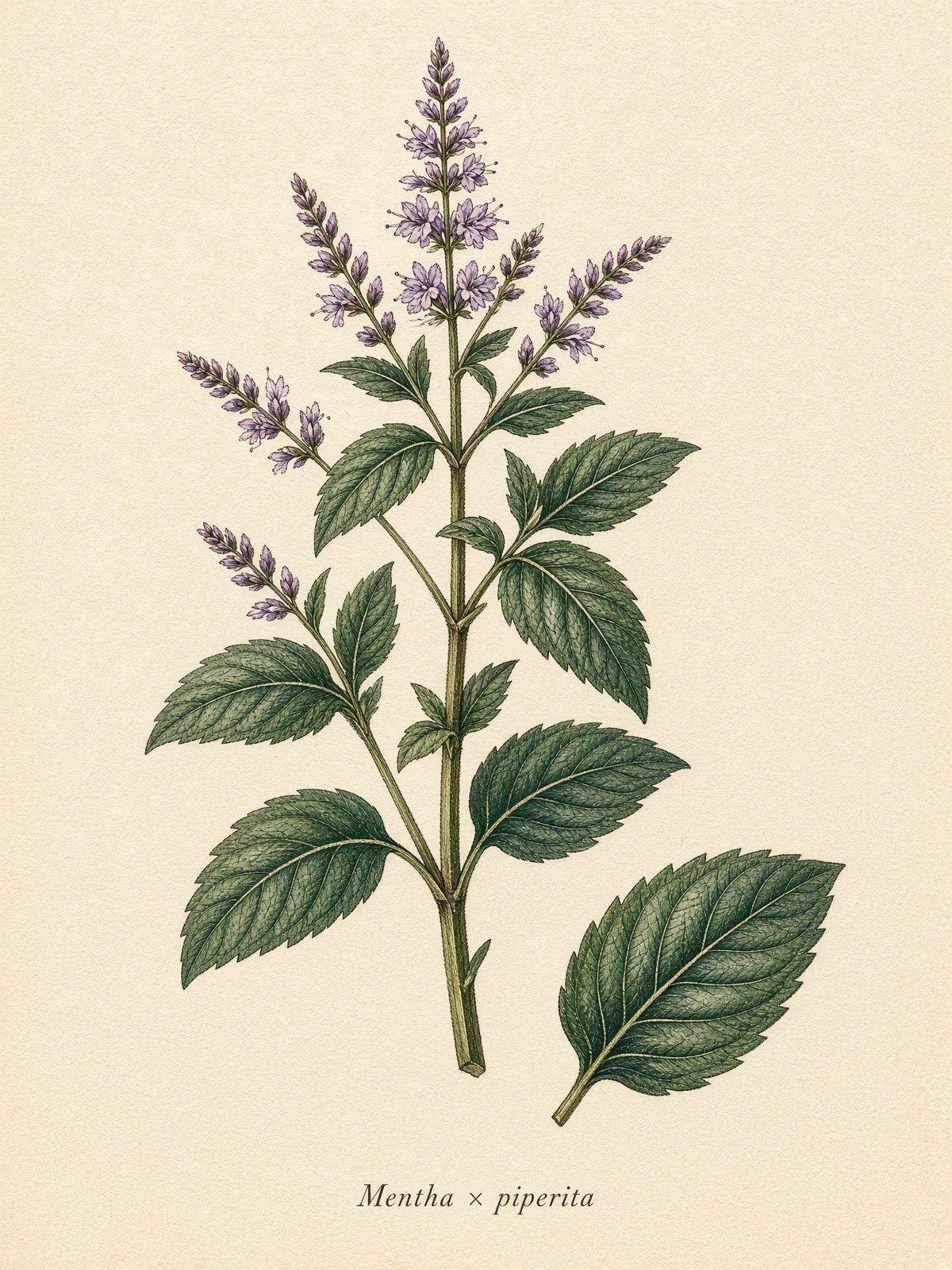
Peppermint
Mentha × piperita
Lamiaceae
A hybrid mint whose menthol cools the gut and opens the sinuses — classic after-dinner leaf.
Culinary herb. Enteric-coated oil is an OTC product in many countries.
- Parts used
- Aerial parts · Leaf
- Traditional notes
- Indigestion · Gas and bloating · Tension headache (temple rub of diluted oil) · Nasal stuffiness
- Grow · USDA 6b
- Perennial, USDA 5–9. Dies back in frost, returns from rhizomes. Start from cuttings or divisions — seed does not come true. In work: Apr · May · Jun · Jul · Aug · Sep
- Harvest
- Cut stems just as flower buds form, morning after dew dries. Two to three cuts a season.
- Plant in a sunk pot or a dedicated bed — it will run.
- Cut hard before flowering for the sweetest leaf.
- Split the clump every other spring or it turns woody in the middle.
Safety
GERD / hiatal hernia (leaf tea is milder than oil) Infants — never apply menthol oil near the face
Companions
Plant with Cabbage, Catnip, Lemon balm, Spearmint.
Lookalikes
- Spearmint — Peppermint is a sterile hybrid; spearmint is the milder kitchen leaf. Sharing the word ‘mint’ is how a strong tea becomes a reflux night.
Lore
Peppermint is a sterile hybrid that should not exist in the wild, and yet it does, wherever watermint and spearmint share a ditch. English apothecaries of the 1700s made Mitcham famous for it. The menthol that cools your tongue is the same molecule that makes a cough drop feel like weather.
The Herbarium — a teaching catalog, not a clinic. Traditional use is history, not a prescription. USDA 6b dates are a week either way, not a promise. Do not eat, drink, or harvest a plant you cannot name.