The Herbarium
Part IV · Fruit & vegetable
Herb. No. 208
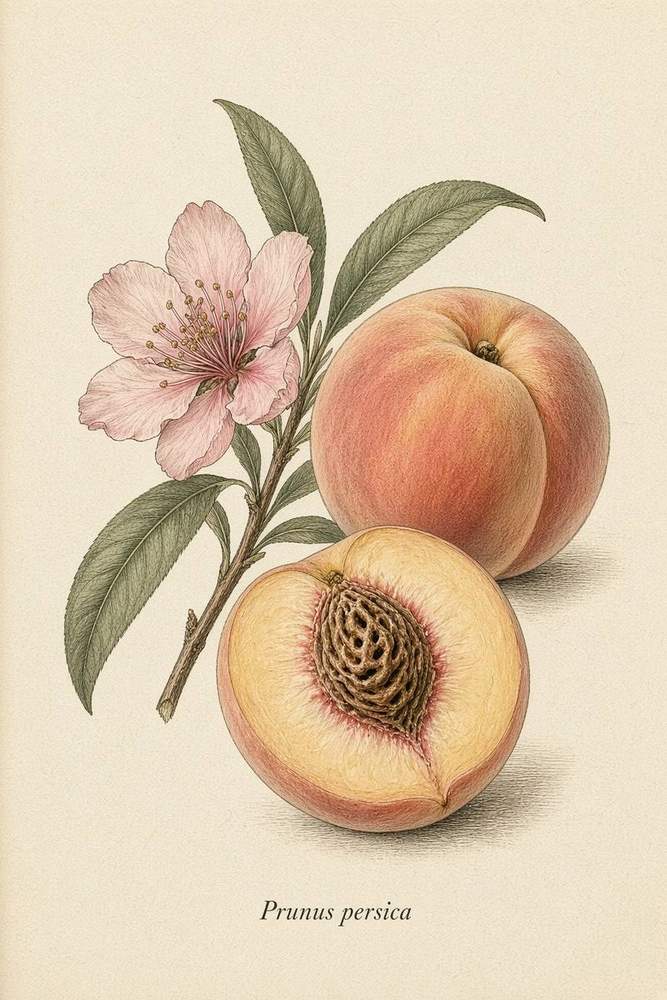
Peach
Prunus persica
Rosaceae
A fuzzy Chinese fruit that Persia only forwarded — ripe flesh is the plate, and the pit is not a supplement.
Ripe fruit is food. Pits are not a tea or a ‘vitamin B17’ protocol — amygdalin is a cyanide glycoside.
- Parts used
- Ripe fruit
- Traditional notes
- Kitchen fruit · Traditional summer dessert · Dried and jam
- Grow · USDA 6b
- Tree, USDA 5–8. Needs winter chill and a late-frost-safe bloom. A named graft. Seedlings are a maybe. In work: Jun · Jul · Aug
- Harvest
- When it smells like a peach and yields at the shoulder.
- Thin fruit or the branches break and the peaches stay small.
- A spray program or a disease-resistant type in wet climates.
Safety
Pit kernels as a supplement Known peach allergy (sometimes with birch)
Companions
Plant with Comfrey, Garlic.
Lore
Chinese literature has the peach as immortality’s fruit. The botanical name still blames Persia. Spanish missions planted it in the American South; Georgia wrote the postcard. Laetrile is a 20th-century pit story with a poison-control ending. Eat the flesh.
The Herbarium — a teaching catalog, not a clinic. Traditional use is history, not a prescription. USDA 6b dates are a week either way, not a promise. Do not eat, drink, or harvest a plant you cannot name.