The Herbarium
Part I · Medicinal herbs
Herb. No. 100
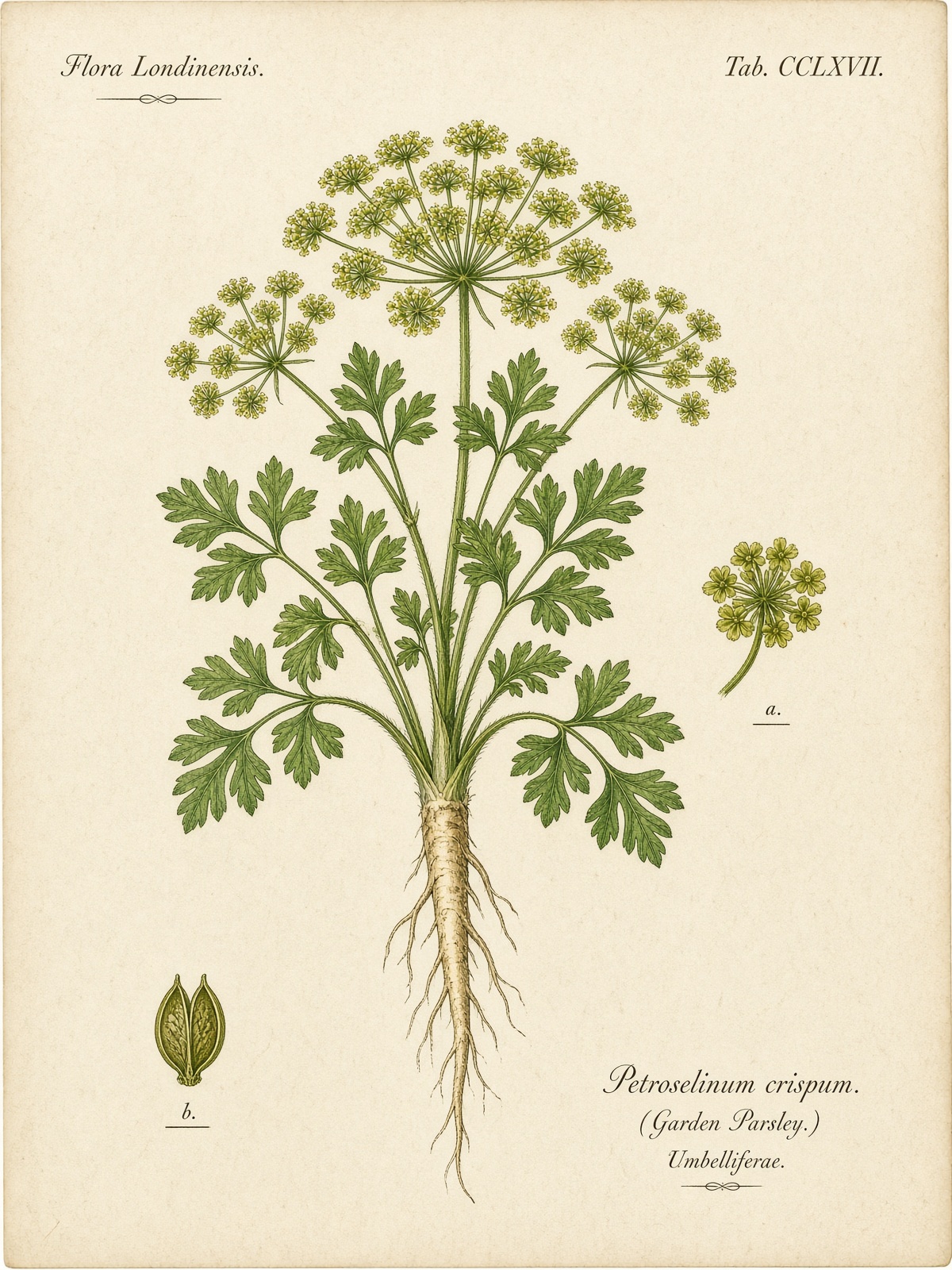
Parsley
Petroselinum crispum
Apiaceae
The garnish that is actually a mineral-green — a kitchen herb with a traditional kidney-and-breath record.
Everyday culinary herb. Do not confuse wild lookalikes in the carrot family.
- Parts used
- Leaf · Stem
- Traditional notes
- Culinary green · After a heavy meal · Fresh breath · Traditional urinary folklore
- Grow · USDA 6b
- Biennial, USDA 5–9, grown as an annual Soak seed overnight. Slow to germinate — be patient. In work: Mar · Apr · May · Jun · Jul · Aug · Sep
- Harvest
- Outer stems first, cut-and-come-again.
- Germination is the only hard part. Keep the seedbed damp for two to three weeks.
- A summer planting for autumn leaf often outlasts a spring one that bolts.
- Do not let it flower if you want leaf; year-two umbels are for seed.
Safety
Pregnancy in medicinal seed/oil amounts Unidentified wild carrot-family plants
Companions
Plant with Asparagus, Borage, Calendula, Chives, Dog rose, French marigold.
Lookalikes
- Poison hemlock — Poison hemlock is still pulled as ‘wild parsley.’ A purple-spotted stem is the difference between supper and Socrates’ cup.
- Water hemlock — Cicuta is the deadliest plant in North American ditches. A wet-ground parsley look-alike has killed people who wanted a garnish.
- Cilantro — Two flat-leaf herbs on the same board. One is coriander. The other is Petroselinum. A soapy leaf is not hemlock — but the umbel family still wants a name.
Lore
The Greeks wove it into graves; the Romans put it on tables. Charlemagne ordered it planted. The garnish that got left on the plate was, for most of history, the point of the plate.
The Herbarium — a teaching catalog, not a clinic. Traditional use is history, not a prescription. USDA 6b dates are a week either way, not a promise. Do not eat, drink, or harvest a plant you cannot name.