The Herbarium
Part IV · Fruit & vegetable
Herb. No. 190
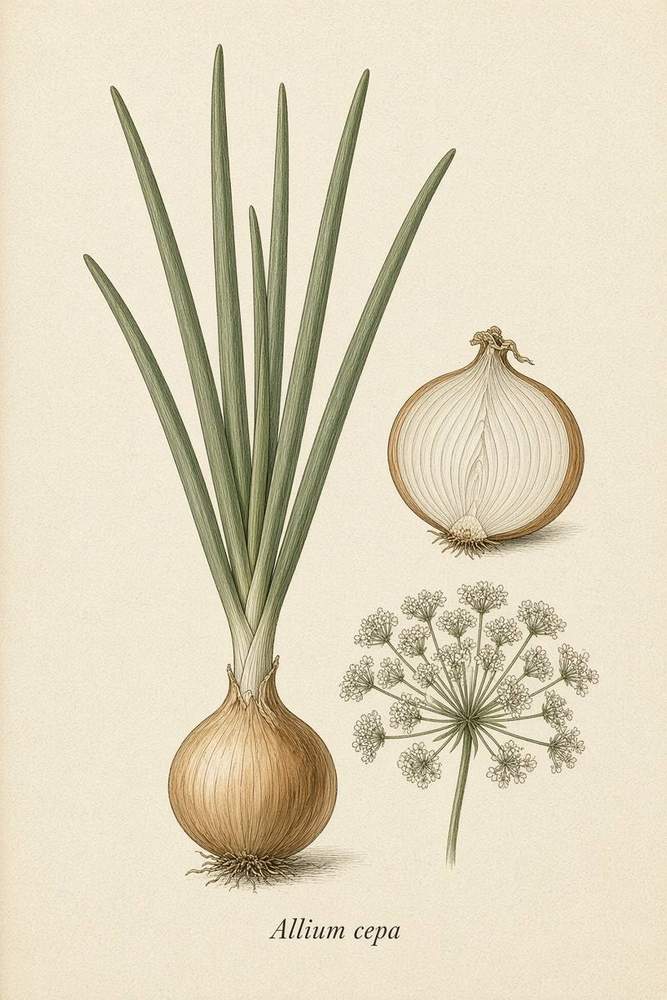
Onion
Allium cepa
Amaryllidaceae
The bulb that starts the pan — a kitchen allium with a long folk record as food, not as a syrup protocol.
Culinary bulb. Chives and garlic are sister plates. Wild alliums need a name first.
- Parts used
- Bulb · Green top
- Traditional notes
- Kitchen aromatic · Traditional cold folklore as food · Soup base
- Grow · USDA 6b
- Biennial grown as an annual. Long-day types north, short-day south. Sets, plants, or seed. Match day-length to your latitude or they will not bulb. In work: Mar · Apr · May · Jul · Aug · Sep
- Harvest
- When tops fall. Cure until wrappers rustle.
- Day length is the secret. A short-day onion in Maine is a scallion forever.
- Cure in shade, airy, two weeks.
- Keep the necks dry in storage.
Safety
Dogs and cats — alliums Known onion intolerance A syrup as a stand-in for a doctor
Companions
Plant with Beet, Broccoli, Cabbage, Carrot, Chamomile, Chives.
Keep apart from Asparagus, Green bean, Pea.
Lore
Egyptian laborers were paid in onions, or so later writers liked to say. The English ‘onion’ is Latin unio, a single pearl. Medieval Europe hung them against plague with the usual success. The kitchen already knew the useful part: start the pan with them.
The Herbarium — a teaching catalog, not a clinic. Traditional use is history, not a prescription. USDA 6b dates are a week either way, not a promise. Do not eat, drink, or harvest a plant you cannot name.