The Herbarium
Part I · Medicinal herbs
Herb. No. 122
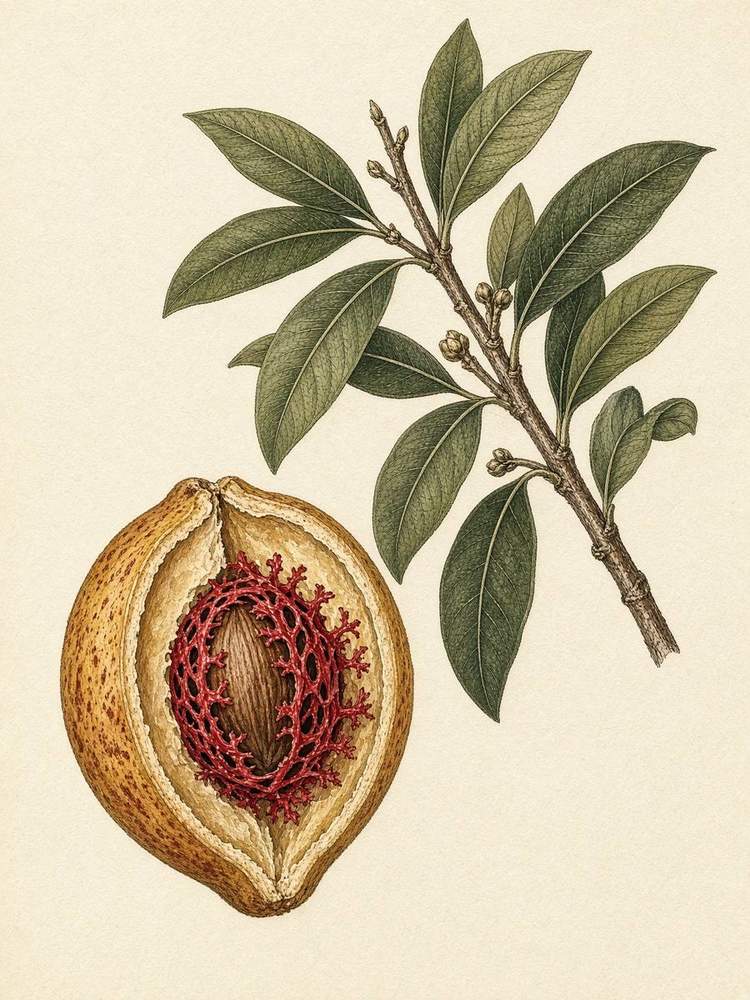
Nutmeg
Myristica fragrans
Myristicaceae
One fruit, two spices — the brown seed and the lacy red mace — a kitchen warm with a hard stop at the teaspoon.
Culinary seed and mace (the aril). Large recreational doses are toxic — nutmeg is a spice, not a high.
- Parts used
- Seed · Aril (mace)
- Traditional notes
- Kitchen spice · After a rich cream sauce · Traditional sleepy folklore in a pinch
- Grow · USDA 6b
- Tropical evergreen, USDA 11–12; greenhouse curiosity north A nursery tree only if you have a conservatory. Most kitchens buy the seed. In work: Jan · Feb · Mar · Apr · May · Jun · Jul · Aug · Sep · Oct · Nov · Dec
- Harvest
- Split ripe fruit; dry the seed and the mace separately. A tree takes years.
- Grate as you need it. Pre-ground nutmeg is sawdust with a memory.
- Mace is the red lace, not a spray can.
- A seed is a seasoning. A tablespoon is a poison-garden topic.
Safety
Pregnancy in medicinal amounts Any plan to eat it by the spoon
Lore
The Dutch East India Company waged a war for these islands and, for a time, kept the whole world’s nutmeg on one chain of rocks. A 17th-century Londoner might pay more for a nutmeg than for a sheep. The lacy red aril was sold separately as mace — two spices, one murderous monopoly.
The Herbarium — a teaching catalog, not a clinic. Traditional use is history, not a prescription. USDA 6b dates are a week either way, not a promise. Do not eat, drink, or harvest a plant you cannot name.