The Herbarium
Part II · Medicinal fungi
Herb. No. 099
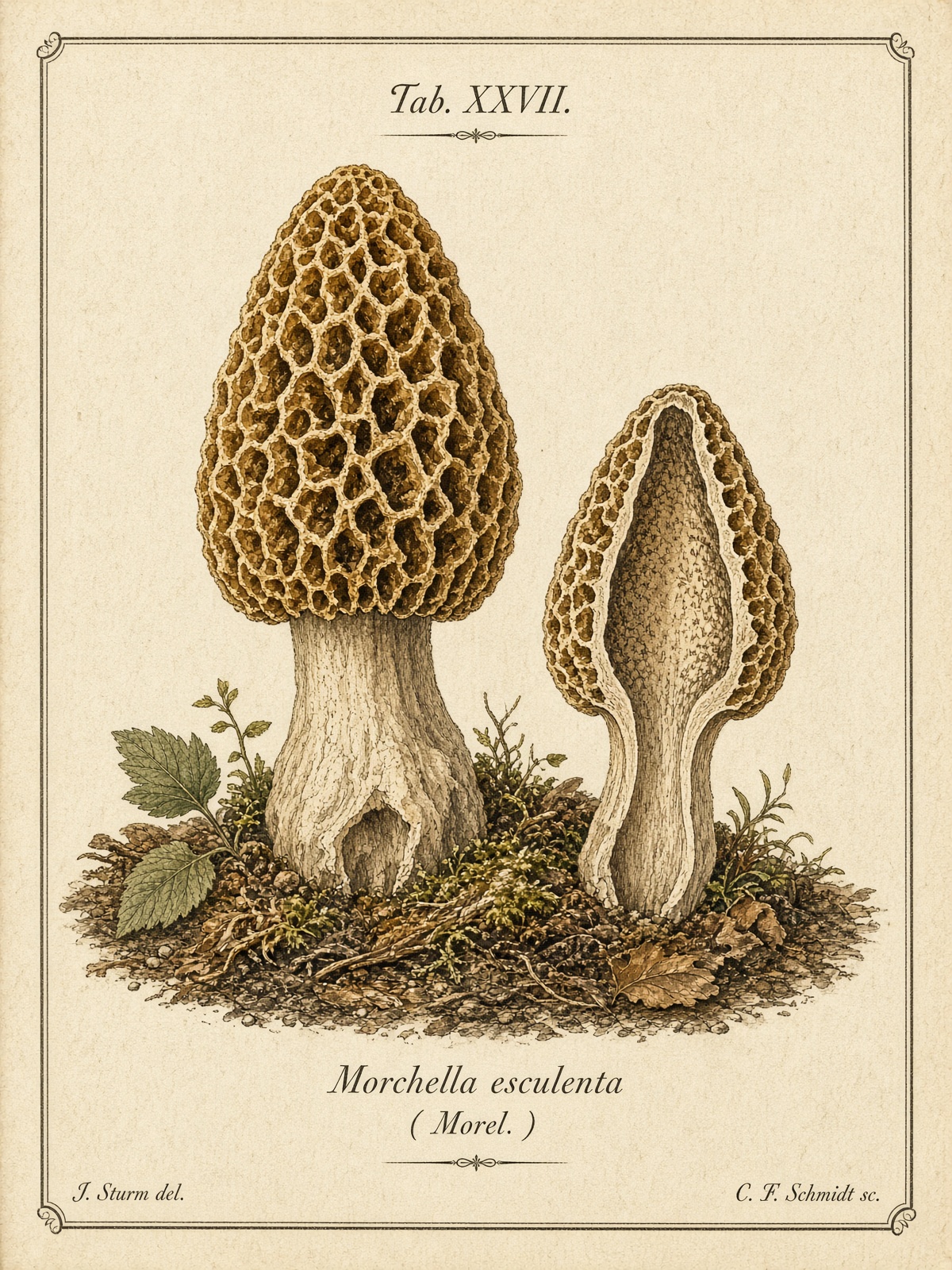
Morel
Morchella esculenta
Morchellaceae
The honeycomb cap of spring woods — a culinary prize whose lookalikes hospitalize people.
Culinary wild mushroom. True morels are edible cooked. False morels (Gyromitra) are a toxic lookalike. Never eat morels raw.
- Parts used
- Fruiting body, cooked
- Traditional notes
- Spring food · Recovery meals folklore
- Grow · USDA 6b
- Temperate spring saprophyte / burn-associate depending on species Outdoor beds with spawned sawdust exist; results are famously fickle. A kit is not a promise. In work: Mar · Apr · May
- Harvest
- When caps are still firm and the pits distinct. Cook the same day.
- Hollow from tip to base is the true-morel rule of thumb — then still cook it.
- False morels look brain-like and are not a ‘variety’.
- Do not treat this as a guaranteed farm. Habitat knowledge is the crop.
Safety
Any doubt in identification Raw morels Gyromitra, ever
Lore
Morchella, the honeycomb that sends people into woods with a religion. False morels (Gyromitra) have killed foragers who were almost sure. The spring flush is a weather rumor, not a calendar date.
The Herbarium — a teaching catalog, not a clinic. Traditional use is history, not a prescription. USDA 6b dates are a week either way, not a promise. Do not eat, drink, or harvest a plant you cannot name.