The Herbarium
Part VII · Toxic
Herb. No. 062
LegalDeadly
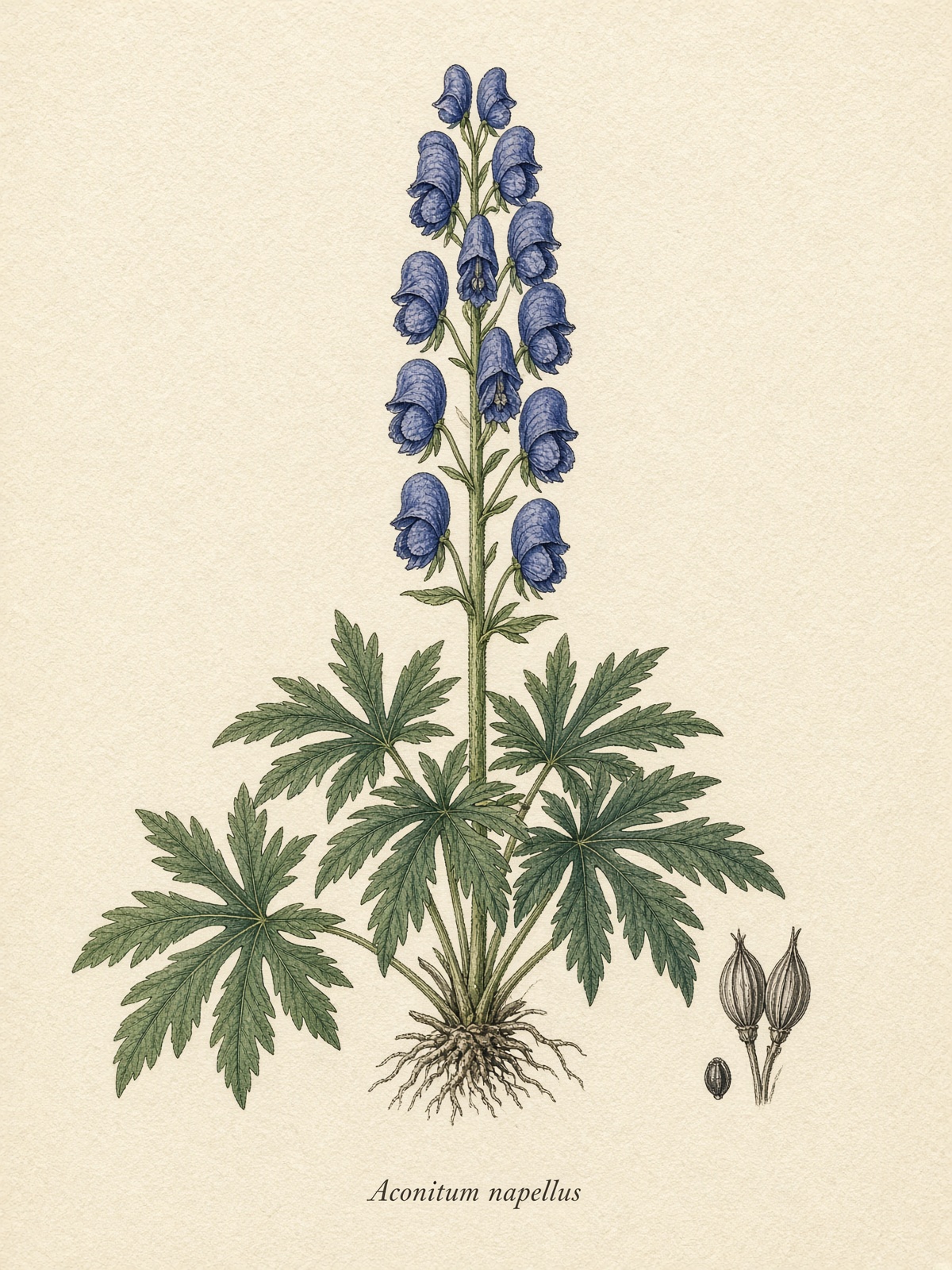
Monkshood
Aconitum napellus
Ranunculaceae
Hooded indigo flowers — beautiful, and poisonous to the touch in sap, let alone as a tea.
Common border perennial. Aconitine is one of the most toxic garden alkaloids.
- Parts used
- None for self-care.
- Traditional notes
- Historical arrow poison and external anodyne — obsolete and deadly
- Grow · USDA 6b
- Perennial, USDA 3–7 If you grow it, gloves from the first cut. Keep it out of children's reach. In work: Jun · Jul
- Harvest
- Do not harvest for medicine.
- Gloves from the first cut. Sap through a paper cut is enough.
- A cool border plant, not a medicine chest.
- Keep it out of children’s reach and out of homemade liniments.
Safety
All medicinal self-use Bare-hand pruning
Lore
Aconite, wolfsbane, the hooded blue flower of alpine meadows. Hunters tipped arrows with it. Touching the sap can be enough. Look, do not pick, do not boil, do not dare.
The Herbarium — a teaching catalog, not a clinic. Traditional use is history, not a prescription. USDA 6b dates are a week either way, not a promise. Do not eat, drink, or harvest a plant you cannot name.