The Herbarium
Part IV · Fruit & vegetable
Herb. No. 219
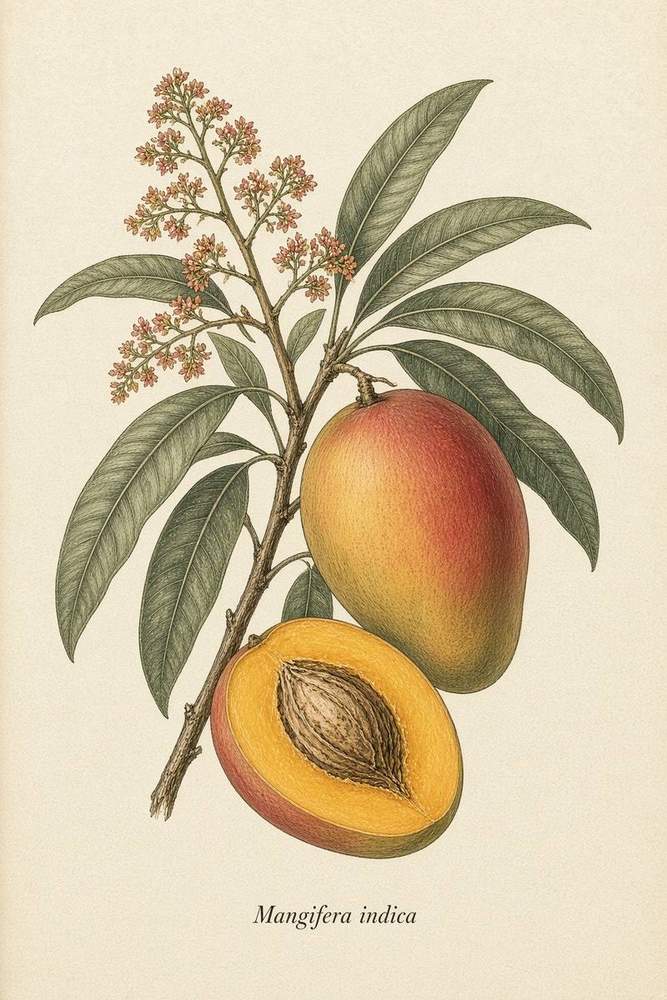
Mango
Mangifera indica
Anacardiaceae
The stone fruit of South Asia — a ripe cheek of orange flesh, and a cashew-family sap that some skins refuse.
Ripe flesh is food. The sap and peel can raise a poison-ivy-family rash in sensitive people. The pit is not a tea.
- Parts used
- Ripe flesh · Green fruit (chutney, salad)
- Traditional notes
- Kitchen fruit · Chutney · Traditional South Asian table
- Grow · USDA 6b
- Tropical tree, USDA 10–11; a large pot or greenhouse north is a conversation A named graft if you want a type. A pit may fruit, late and maybe fibrous. In work: May · Jun · Jul · Aug
- Harvest
- When the shoulder yields and the smell is mango, not green stem.
- Dwarf types exist for pots.
- Do not refrigerate a hard fruit — ripen first.
Safety
Peel and sap if you blister from poison ivy Known mango allergy
Lore
Sanskrit āmra. The Portuguese took manga to Brazil and the world took the word. Mughal gardens already had the named types. A dried mango leather is older than the gummy strip. The cashew-family rash is why some people ‘hate mango’ when they hate the peel.
The Herbarium — a teaching catalog, not a clinic. Traditional use is history, not a prescription. USDA 6b dates are a week either way, not a promise. Do not eat, drink, or harvest a plant you cannot name.