The Herbarium
Part I · Medicinal herbs
Herb. No. 006
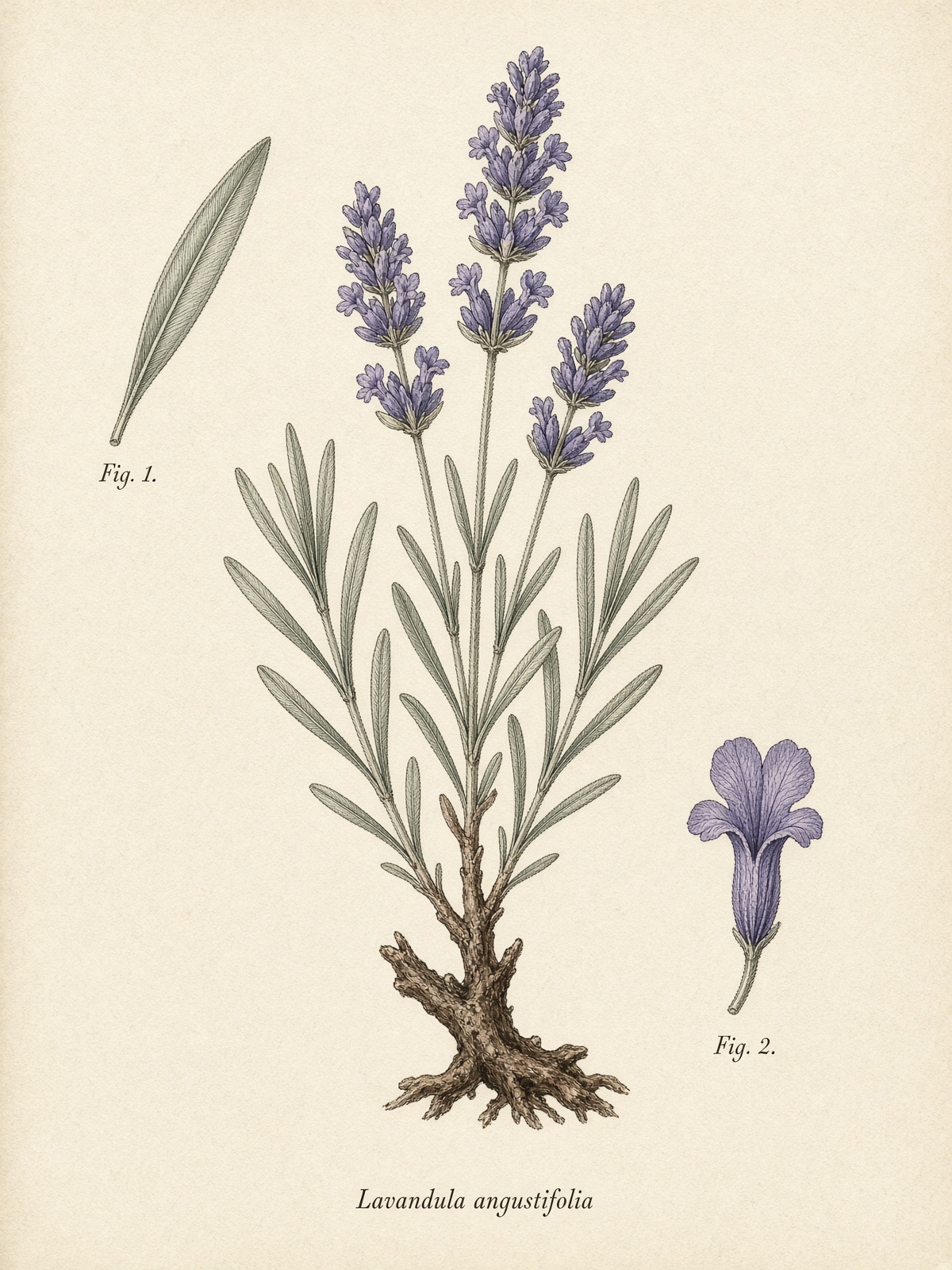
Lavender
Lavandula angustifolia
Lamiaceae
Silver-leaved Mediterranean shrub; the scent alone is a documented mild anxiolytic.
Culinary and cosmetic. Essential oil is concentrated — not a beverage.
- Parts used
- Flower spikes
- Traditional notes
- Restless anxiety · Tension headache · Minor burns and insect bites (diluted) · Linen moth-sachet
- Grow · USDA 6b
- Woody perennial, USDA 5–9 depending on cultivar Cuttings root more truly than seed. Plant in spring. In work: Apr · May · Jun · Jul · Aug
- Harvest
- Cut spikes as the lowest florets open. Dry in bunches.
- Gravel, lime, and a baking wall. Do not mulch the crown with compost.
- Prune into the leafy wood after bloom — never down to brown sticks.
- Start from cuttings if you want the named scent you bought.
Safety
Known lavender allergy Undiluted oil on broken skin
Companions
Plant with Anise hyssop, Bee balm, Borage, Calendula, Clove pink, Cornflower.
Lore
Romans scented the wash-water — lavare, to wash — and the name stuck. Provence turned it into a crop and a cliché. The soapiness people complain of in over-steeped tea is the linalool talking; a pinch is a garden, a fist is a sachet.
The Herbarium — a teaching catalog, not a clinic. Traditional use is history, not a prescription. USDA 6b dates are a week either way, not a promise. Do not eat, drink, or harvest a plant you cannot name.