The Herbarium
Part I · Medicinal herbs
Herb. No. 164
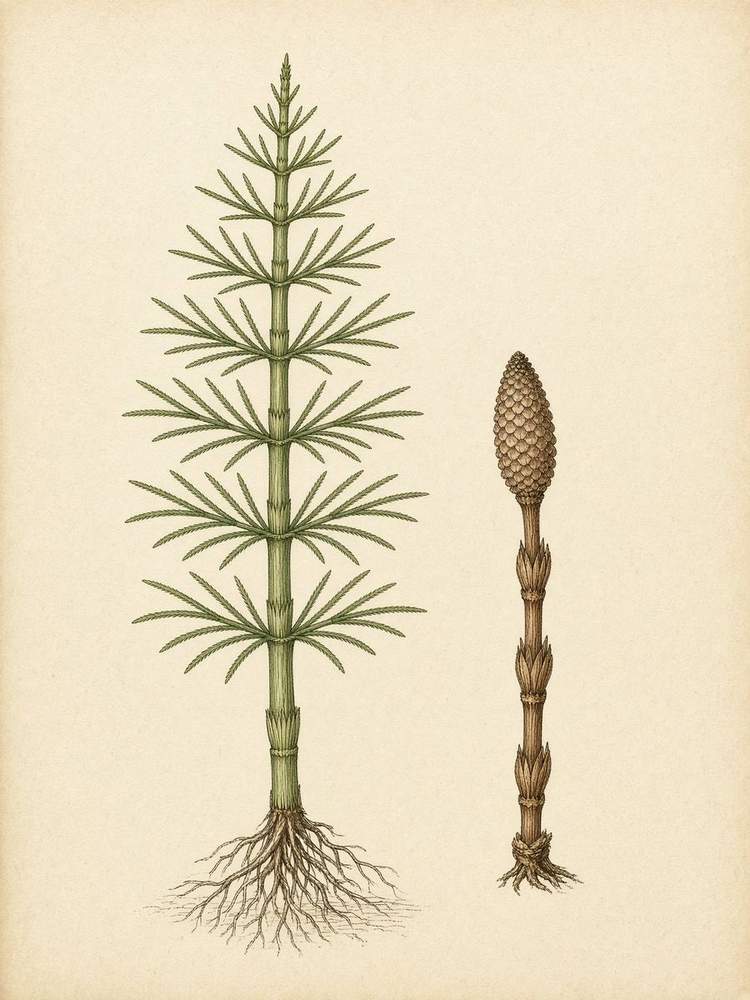
Horsetail
Equisetum arvense
Equisetaceae
A living fossil of jointed green stems — silica folklore for hair and bone, and a weed that will own a wet bed.
Spring sterile stems as a traditional mineral tea. Marsh horsetail and some species concentrate toxins — identify E. arvense. Not a daily pot for months.
- Parts used
- Sterile aerial stems
- Traditional notes
- Traditional mineral tea · Mild astringent folklore · Hair-rinse folklore
- Grow · USDA 6b
- Perennial, USDA 1–9, wet You usually inherit it. A pot if you must grow it on purpose — never in open ground you like. In work: May · Jun · Jul
- Harvest
- Green sterile stems in late spring, dry. Leave the brown fertile shoots.
- A bucket, not a border.
- Dry it. Fresh in quantity is a different, thiaminase problem.
Safety
Long daily use Unidentified Equisetum Nicotine-patch caution in old texts is folklore — still, don’t live on it
Lookalikes
- Ephedra — Two jointed green sticks. Horsetail is a silica scouring rush. Ephedra is a restricted stimulant in most of the United States.
Lore
Equisetum is older than the dinosaurs. Victorian furniture-makers used it as sandpaper — the silica is real. Culpeper wanted it for wounds. The fertile brown shoot is a Japanese spring vegetable in a different species (E. arvense tsukushi), which is why this plate keeps saying: name it, then decide.
The Herbarium — a teaching catalog, not a clinic. Traditional use is history, not a prescription. USDA 6b dates are a week either way, not a promise. Do not eat, drink, or harvest a plant you cannot name.