The Herbarium
Part I · Medicinal herbs
Herb. No. 123
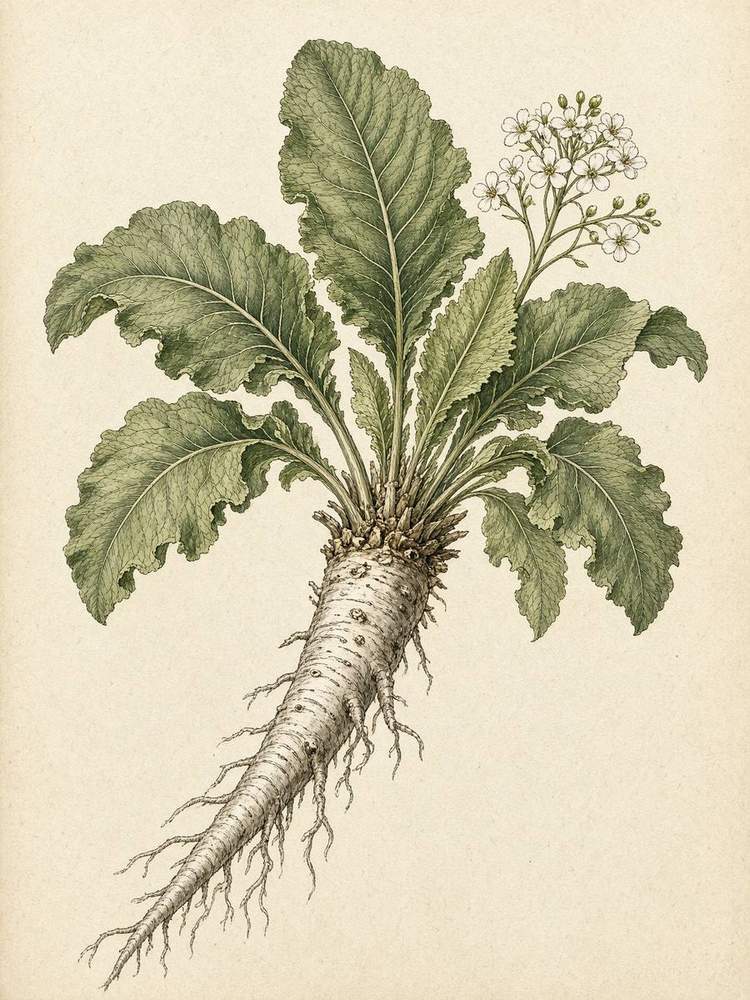
Horseradish
Armoracia rusticana
Brassicaceae
The sinus-clearing white root of spring — a prepared-sauce plant with a traditional wet-cough folklore.
Culinary root. The heat is allyl isothiocyanate — same family as mustard, not a chili.
- Parts used
- Fresh root
- Traditional notes
- Kitchen pungent · Sinus folklore · Traditional wet-cough companion to meat
- Grow · USDA 6b
- Perennial, USDA 3–9. A patch, not a polite row. A thumb of root with a bud. Seed is rare and unnecessary. In work: Mar · Apr · Sep · Oct · Nov
- Harvest
- Side roots in autumn of year one, or as needed. Leave the crown.
- Plant it where you can live with it forever.
- Grate outdoors if you like having a face.
- Vinegar within a minute or the heat walks off.
Safety
Hypothyroid caution in huge daily Brassica amounts Open wounds (the juice burns)
Companions
Plant with Calendula, Green bean, Potato.
Lore
The Germans called it Meerrettich, sea radish; English ears heard ‘mare’ and then ‘horse.’ Passover’s bitter herb in some Ashkenazi houses is this root, not lettuce. A 16th-century German herbal already has it as a sauce — the sinus joke is older than the bottled cream.
The Herbarium — a teaching catalog, not a clinic. Traditional use is history, not a prescription. USDA 6b dates are a week either way, not a promise. Do not eat, drink, or harvest a plant you cannot name.