The Herbarium
Part VI · Regulated or restricted
Herb. No. 026
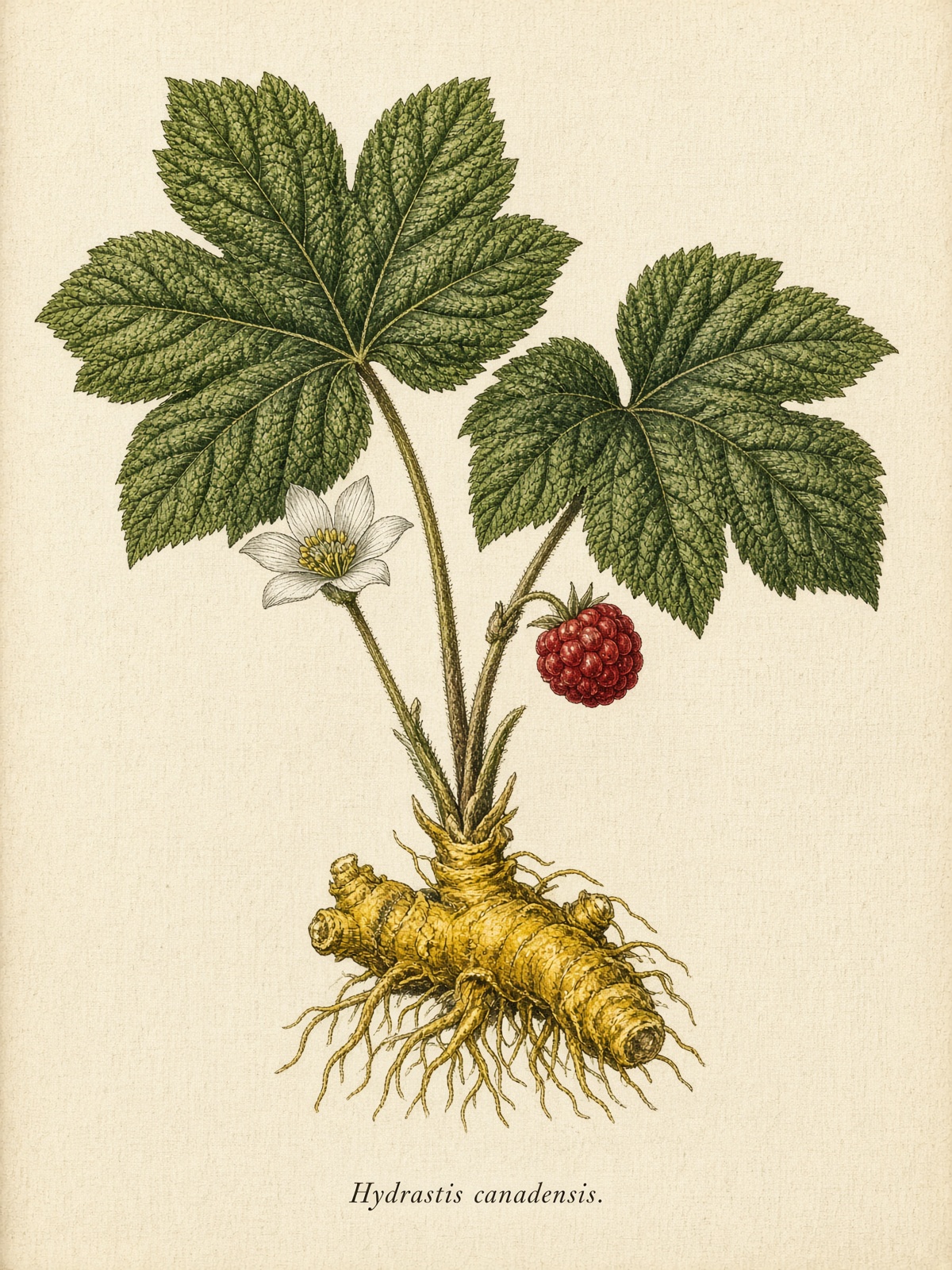
Goldenseal
Hydrastis canadensis
Ranunculaceae
A threatened woodland root, bitter and berberine-yellow — not an everyday immune tonic.
At-risk wild plant (CITES / United Plant Savers). Buy cultivated root only.
- Parts used
- Root and rhizome (cultivated only)
- Traditional notes
- Catarrhal mucosa · Short infectious diarrhea (clinician-era use) · Bitter digestive
- Grow · USDA 6b
- Woodland perennial, USDA 4–8 Stratified seed or rootlets from ethical nurseries. Never dig wild stands. In work: Apr · May · Sep · Oct
- Harvest
- After 5–7 years, and only from a planted bed.
- Woodland shade, leaf mold, and five to seven years to a root.
- Buy cultivated planting stock. Wild-dug rhizome is a conservation failure.
- Mulch with leaves. It wants to forget it is in a garden.
Safety
Pregnancy Newborns Glucose-6-phosphate dehydrogenase deficiency
Lore
The Iroquois and neighboring nations used the yellow rhizome as dye and bitter. Settlers turned it into a cure-all and nearly collected it out of the woods. Most of what is honest now is cultivated — wild stands are a conservation problem in a bottle.
The Herbarium — a teaching catalog, not a clinic. Traditional use is history, not a prescription. USDA 6b dates are a week either way, not a promise. Do not eat, drink, or harvest a plant you cannot name.