The Herbarium
Part I · Medicinal herbs
Herb. No. 010
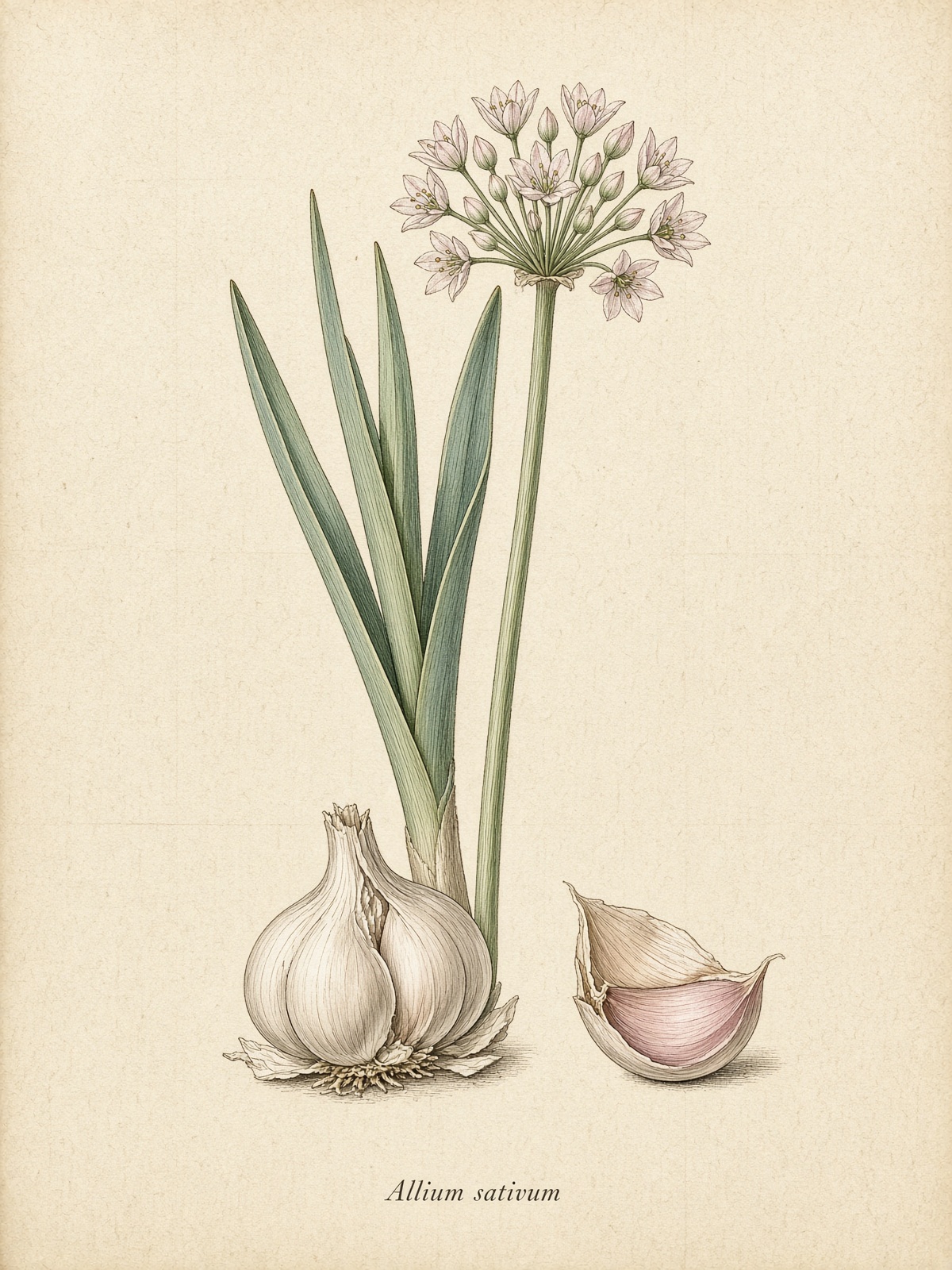
Garlic
Allium sativum
Amaryllidaceae
The original kitchen antimicrobial — crushed raw for punch, roasted for daily food medicine.
Food.
- Parts used
- Bulb
- Traditional notes
- Early colds · Mildly elevated blood pressure · Fungal skin (crushed, briefly) · Intestinal worms in folk practice
- Grow · USDA 6b
- Hardneck and softneck types; plant in autumn in most climates. Separate cloves; plant point up, 2 inches deep, October–November. In work: Mar · Apr · May · Jun · Oct · Nov
- Harvest
- When 1/3 of leaves have browned, early summer.
- Cloves in the ground at the first hard frost. Point up, two inches deep.
- Mulch. Pull scapes on hardnecks so the bulb fattens.
- Harvest when half the leaves have yellowed; cure in the shade two weeks.
Safety
Close to surgery Low-FODMAP diets in a flare
Companions
Plant with Apple, Beet, Borage, Calendula, Chives, Comfrey.
Keep apart from Asparagus, Green bean, Pea.
Lookalikes
- Lily of the valley — Two-leaved shade plants in spring. One is soup. The other is a cardiac glycoside that looks like a lily and smells of nothing useful.
Lore
Egyptian laborers took it as wages. Horace complained that it was rustic. During the plagues of Europe it hung in doorways, which did nothing for the plague and everything for the smell of the street. Allicin, the bite, only appears after the knife.
The Herbarium — a teaching catalog, not a clinic. Traditional use is history, not a prescription. USDA 6b dates are a week either way, not a promise. Do not eat, drink, or harvest a plant you cannot name.