The Herbarium
Part VII · Toxic
Herb. No. 060
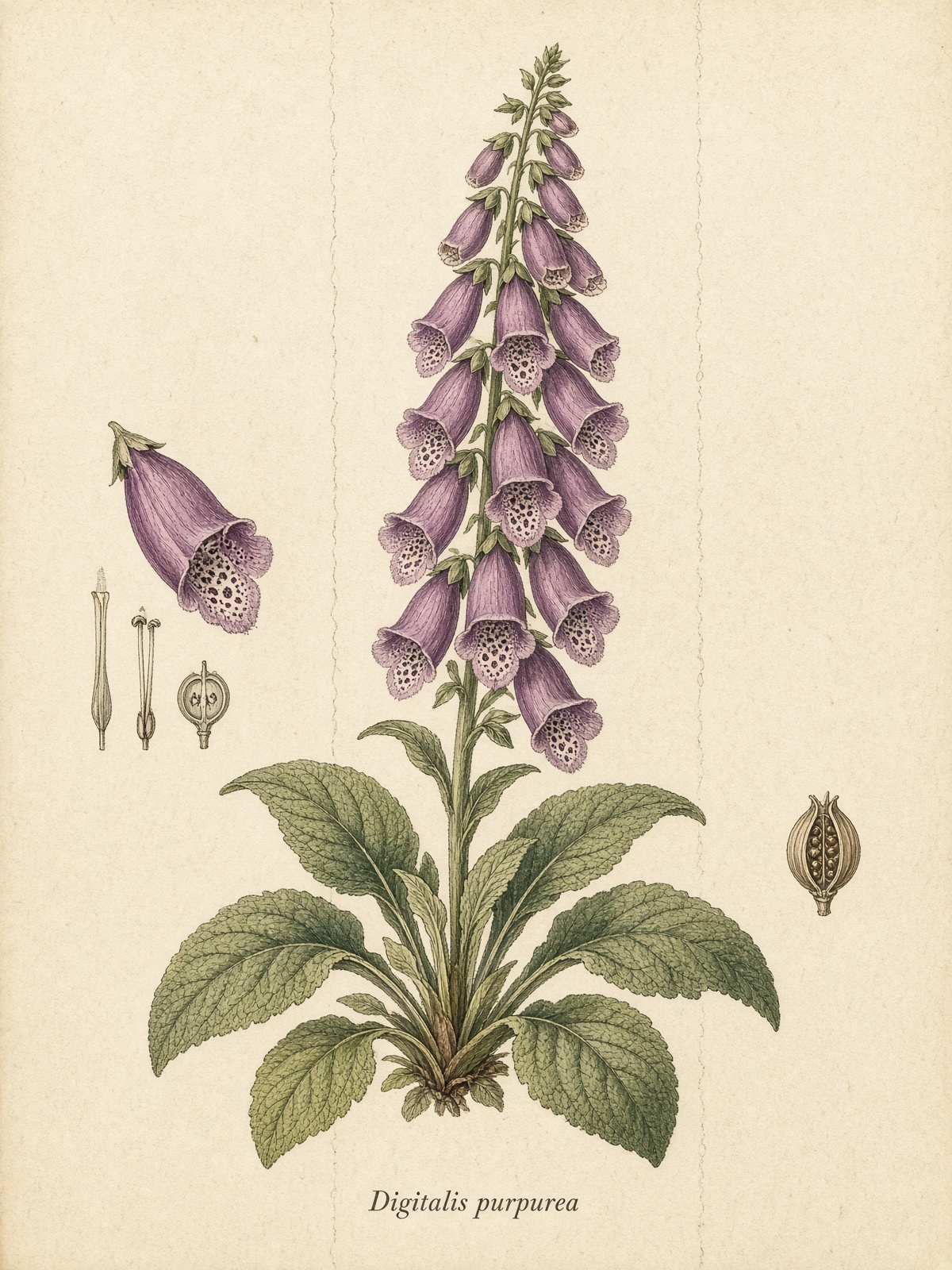
Foxglove
Digitalis purpurea
Plantaginaceae
The spotted thimble that became digoxin — a poison-garden teaching plant, not a homegrown heart tonic.
Legal ornamental. Cardiac glycosides are prescription drugs. Home use as heart medicine is a well-known way to die.
- Parts used
- None for self-care. Pharmaceutical glycosides only.
- Traditional notes
- Historical dropsy treatment — now obsolete as plant medicine
- Grow · USDA 6b
- Biennial, USDA 4–9. Common cottage ornamental. If you grow it for the bees, label it. Gloves for sap. Keep from children and foragers who might mistake leaves. In work: May · Jun · Jul
- Harvest
- Do not harvest for medicine.
- Grow it for bees, labeled. Gloves for sap.
- Never in a tea blend. Comfrey-leaf confusion has killed people.
- Deadhead if you do not want a thicket of biennials.
Safety
All unsupervised internal use
Lookalikes
- Comfrey — The worst garden story in this folio: Digitalis in a kettle meant for Symphytum. Cardiac glycosides are not a wound tea.
- Hollyhock — Two cottage spires. One is a cardiac drug. The other is a mallow you may not want to eat either, but it will not stop a heart in a cup.
Lore
Folksglove, fairy thimble. William Withering put Digitalis into the clinic in 1785 for dropsy, which is how a cottage poison became a heart drug. The therapeutic dose and the lethal dose are neighbors. Teaching plate only.
The Herbarium — a teaching catalog, not a clinic. Traditional use is history, not a prescription. USDA 6b dates are a week either way, not a promise. Do not eat, drink, or harvest a plant you cannot name.