The Herbarium
Part I · Medicinal herbs
Herb. No. 048
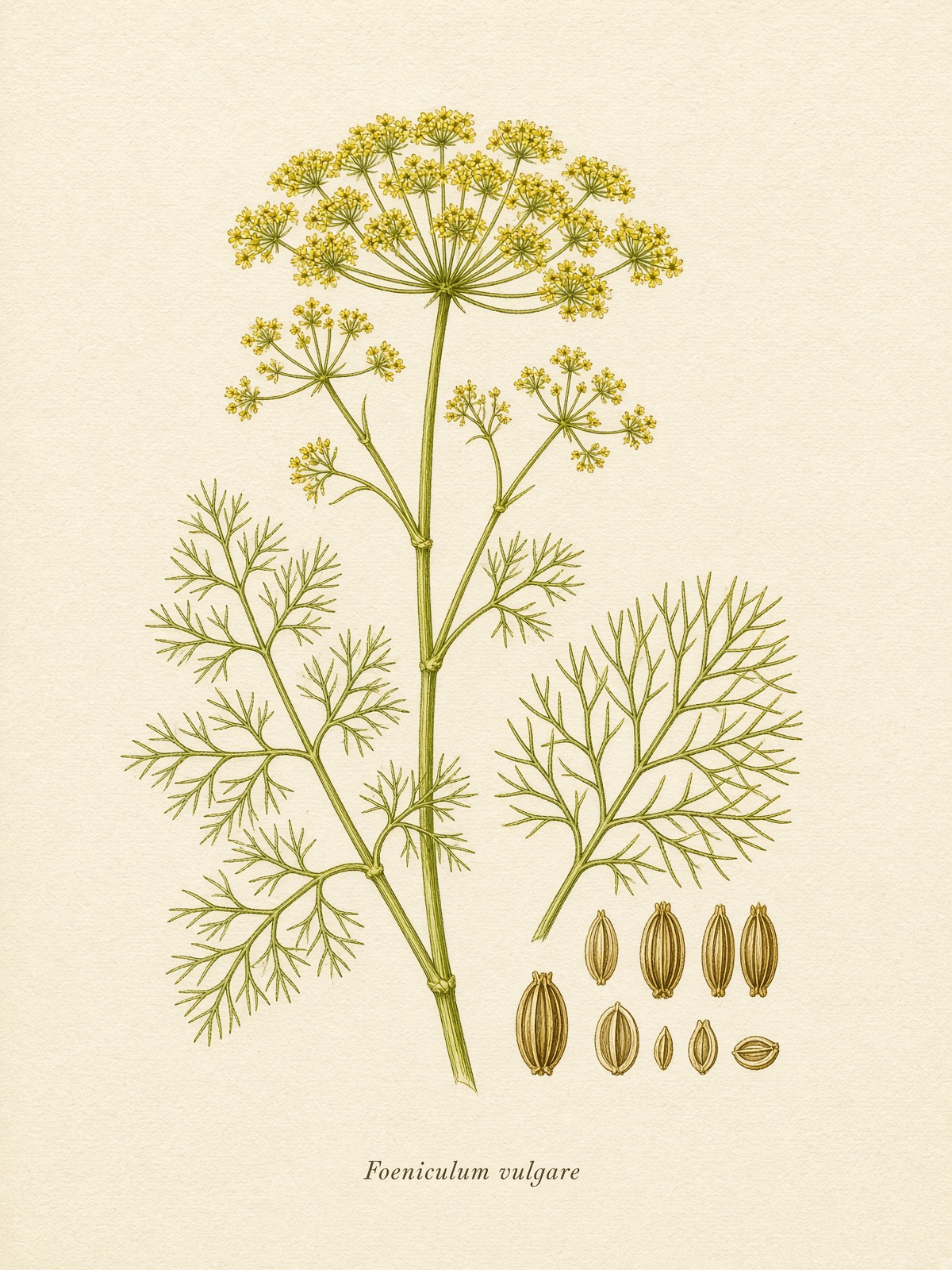
Fennel
Foeniculum vulgare
Apiaceae
Anise-sweet seed for gas, colic folklore, and after-dinner breath.
Culinary seed and bulb. Do not confuse with poison hemlock.
- Parts used
- Ripe seed · Bulb and frond as food
- Traditional notes
- Bloating · After-meal cramp · Fresh breath · Nursing folklore (evidence mixed)
- Grow · USDA 6b
- Perennial / biennial, USDA 6–10. Bronze and green types. Direct-sow; it resents transplanting. Do not plant beside dill if you want true seed. In work: Apr · May · Jun · Jul · Aug · Sep
- Harvest
- Seed heads when they tan; bulb when tennis-ball plump.
- Sow in place. It resents transplanting and will hybridize with dill.
- Bag ripening umbels or the birds get the seed.
- Do not confuse wild feathery Apiaceae — hemlock is on the toxic drawer.
Safety
Known Apiaceae allergy Unidentified wild lookalikes
Companions
Keep apart from Carrot, Cilantro, Dill, Green bean, Pea, Sweet basil.
Lookalikes
- Poison hemlock — Anise-scented foliage is not a field test. Poison hemlock has been called ‘wild fennel’ by people who then got very still.
- Dill — Anise cousins in the same bed will cross and confuse a seed harvest. Neither is hemlock, and both have been mistaken for it.
Lore
Prometheus hid fire in a fennel stalk. Roman women chewed the seed to keep hunger off; the bulb is a later, sweeter invention. The feathery leaf is why people confuse it with things that kill you — look, then cook.
The Herbarium — a teaching catalog, not a clinic. Traditional use is history, not a prescription. USDA 6b dates are a week either way, not a promise. Do not eat, drink, or harvest a plant you cannot name.