The Herbarium
Part I · Medicinal herbs
Herb. No. 158
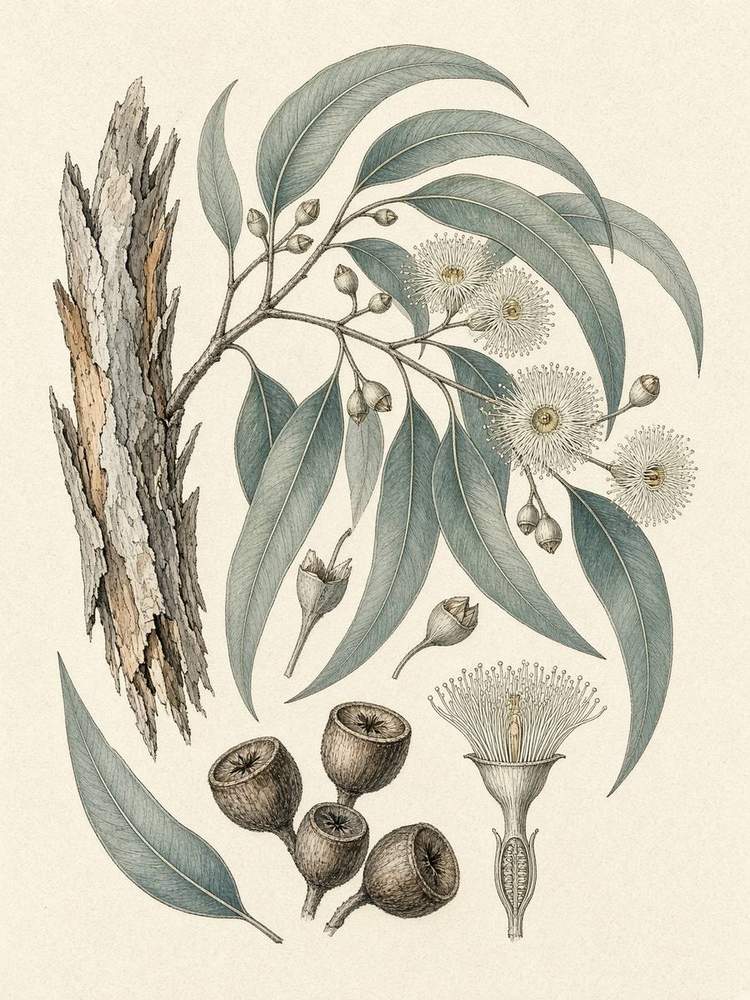
Eucalyptus
Eucalyptus globulus
Myrtaceae
Blue gum — the fever tree of Australia, a steam-inhalation leaf, and an oil that does not belong in a cup.
Leaf inhalation and a weak tea in traditional use. Essential oil is not a beverage and is toxic if swallowed.
- Parts used
- Leaf (inhalation; weak decoction)
- Traditional notes
- Steam for congestion · Traditional fever-tree folklore
- Grow · USDA 6b
- Tree, USDA 8–11 depending on type; E. globulus is tender in hard frost A named smaller cultivar if you do not want a 150-foot gum. In work: Jan · Feb · Mar · Apr · May · Jun · Jul · Aug · Sep · Oct · Nov · Dec
- Harvest
- Older sickle leaves, dry, for steam. Never distill at home into a drink.
- A dwarf cultivar, or a neighbor’s tree.
- Oil and leaf are different drugs.
Safety
Oil internally Infants Asthma that worsens with menthol steam
Lore
The British planted it in malarial marshes on the theory that a thirsty tree would drain a swamp. Sometimes the swamp died; sometimes the tree became a weed. Tasmanian blue gum is the oil of the pharmacy. Aboriginal uses of many eucalypts are older than that bottle and are not this one species.
The Herbarium — a teaching catalog, not a clinic. Traditional use is history, not a prescription. USDA 6b dates are a week either way, not a promise. Do not eat, drink, or harvest a plant you cannot name.