The Herbarium
Part I · Medicinal herbs
Herb. No. 128
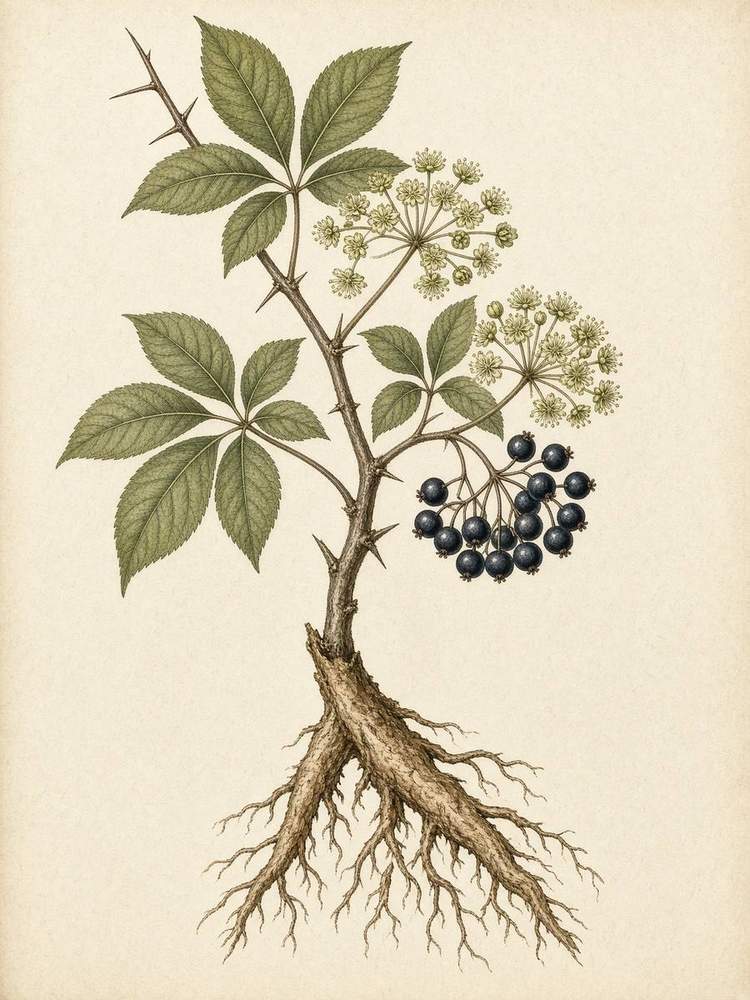
Eleuthero
Eleutherococcus senticosus
Araliaceae
The Siberian cousin of ginseng — a thorny adaptogen of cold woods, not the man-root on the other plate.
Cultivated root and stem bark as a tonic. Often sold as ‘Siberian ginseng’ — it is not Panax.
- Parts used
- Root · Stem bark
- Traditional notes
- Fatigue · Recovery · Traditional stamina tonic · Cold-weather folklore
- Grow · USDA 6b
- Shrub, USDA 3–8, woodland edge A nursery plant. Seed needs cold and patience. In work: Apr · May · Sep · Oct
- Harvest
- Root in autumn of year 4+ from a shrub you planted. Leave wild taiga stands.
- Thorns are real. Gloves.
- This is not Panax. Different plant, similar job-description.
- Morning tonic. If it sparks you, it is not a nightcap.
Safety
Uncontrolled hypertension Acute feverish illness in some traditional systems Evening dose if it wakes you
Lore
Soviet sport scientists made ‘Siberian ginseng’ a Cold War export when Korean ginseng was dear. The plant had been cí wǔ jiā in Chinese medicine long before a lab in Moscow needed a substitute. The name still fools shoppers into thinking they bought Panax. They did not.
The Herbarium — a teaching catalog, not a clinic. Traditional use is history, not a prescription. USDA 6b dates are a week either way, not a promise. Do not eat, drink, or harvest a plant you cannot name.