The Herbarium
Part IV · Fruit & vegetable
Herb. No. 200
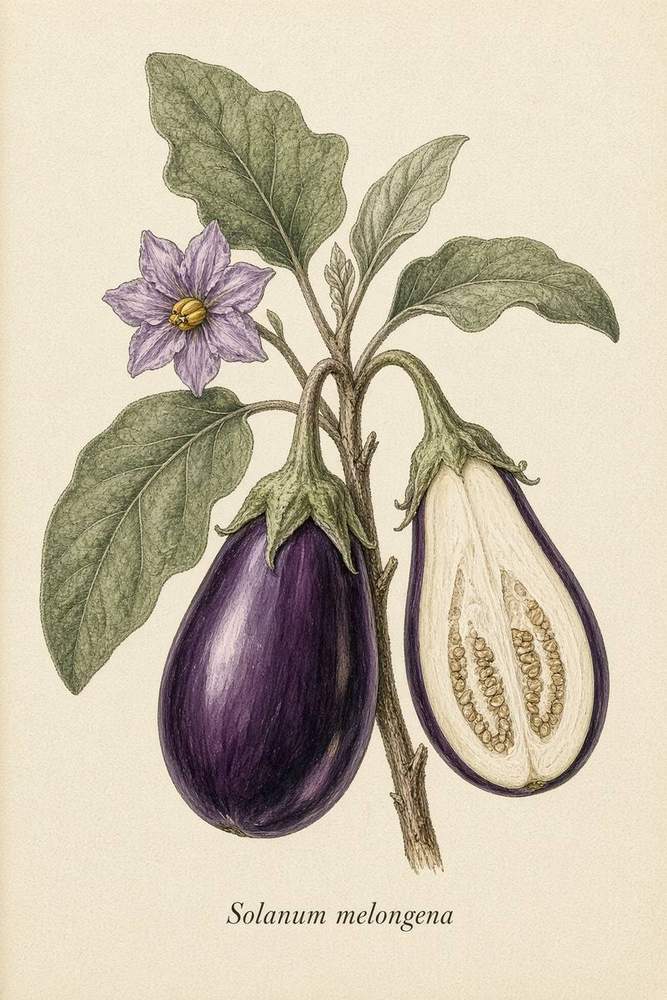
Eggplant
Solanum melongena
Solanaceae
The glossy nightshade fruit of Asian and Mediterranean kitchens — bitter if underripe, silk if cooked with oil.
Ripe cooked fruit is food. Raw in quantity is a nightshade argument. Leaf is not tea.
- Parts used
- Ripe fruit, cooked
- Traditional notes
- Kitchen fruit · Traditional baba ghanoush, baingan, parmigiana
- Grow · USDA 6b
- Tender annual. Wants heat like a tomato, only more. Start indoors early. Transplant after nights are truly warm. In work: May · Jun · Jul · Aug · Sep
- Harvest
- Glossy, before the skin dulls and the seeds harden.
- A black plastic mulch in a short summer.
- Pick glossy. Dull is seedy.
Safety
Nightshade leaf Known eggplant allergy (rare, sometimes with other nightshades)
Companions
Plant with Cayenne, Dog rose, French marigold, Green bean, Sweet basil, Thyme.
Keep apart from Potato, Tomato.
Lore
Sanskrit vatinganah wandered into Persian, Arabic, and then Catalan albergínia — hence aubergine. The English egg-plant is a white cultivar that looked like a hen’s egg on a stall. Imam bayildi, ‘the imam fainted,’ is a Turkish oil story. He did not faint from medicine. He fainted from the olive oil bill.
The Herbarium — a teaching catalog, not a clinic. Traditional use is history, not a prescription. USDA 6b dates are a week either way, not a promise. Do not eat, drink, or harvest a plant you cannot name.