The Herbarium
Part I · Medicinal herbs
Herb. No. 005
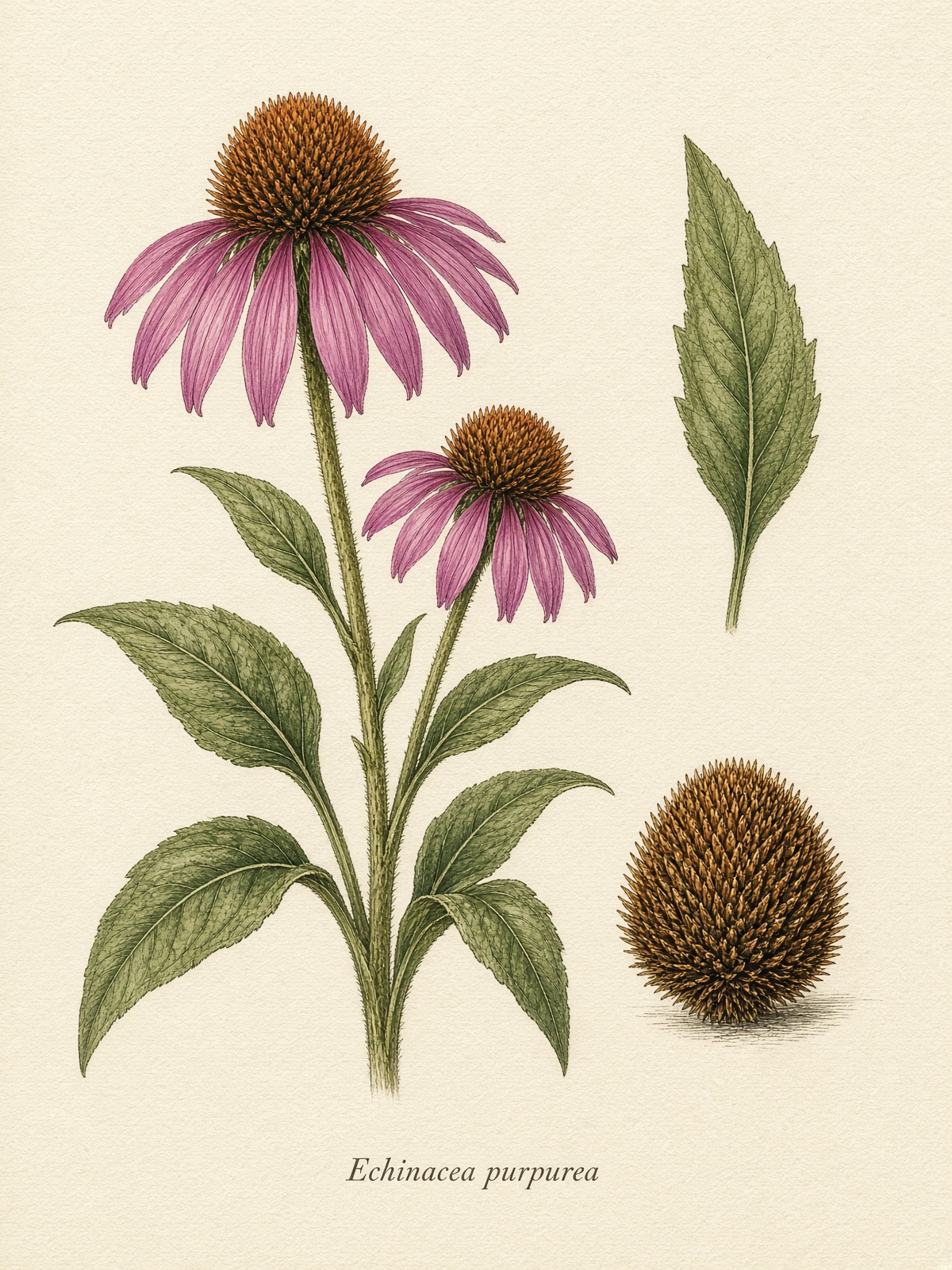
Purple coneflower
Echinacea purpurea
Asteraceae
Prairie coneflower taken at the first scratch of a cold — immune-modulating, not a daily tonic.
Common garden perennial and herbal product.
- Parts used
- Root · Flowering tops
- Traditional notes
- Early cold and flu · Sore throat gargle · Slow-healing minor wounds (topical)
- Grow · USDA 6b
- Perennial, USDA 3–9 Cold-stratify seed 30 days, or buy plants. Blooms year two from seed. In work: Mar · Apr · May · Jun · Jul · Aug · Sep · Oct
- Harvest
- Flowers in year two; roots in autumn of year three.
- Cold-stratify seed or buy plants. First-year bloom is a bonus, not a promise.
- Leave some seed heads for goldfinches; harvest roots only from plants three years old.
- Sharp drainage. Winter wet kills more coneflowers than cold.
Safety
Progressive systemic diseases (TB, MS, autoimmune) unless supervised Asteraceae allergy
Lore
Plains nations chewed the root for snakebite and colds; 19th-century Eclectic physicians made it an American pharmacy staple, then medicine forgot it, then the 1980s remembered. The tingle on the tongue is the old quality test — if it doesn’t buzz, it isn’t the plant.
The Herbarium — a teaching catalog, not a clinic. Traditional use is history, not a prescription. USDA 6b dates are a week either way, not a promise. Do not eat, drink, or harvest a plant you cannot name.