The Herbarium
Part V · Garden flowers
Herb. No. 242
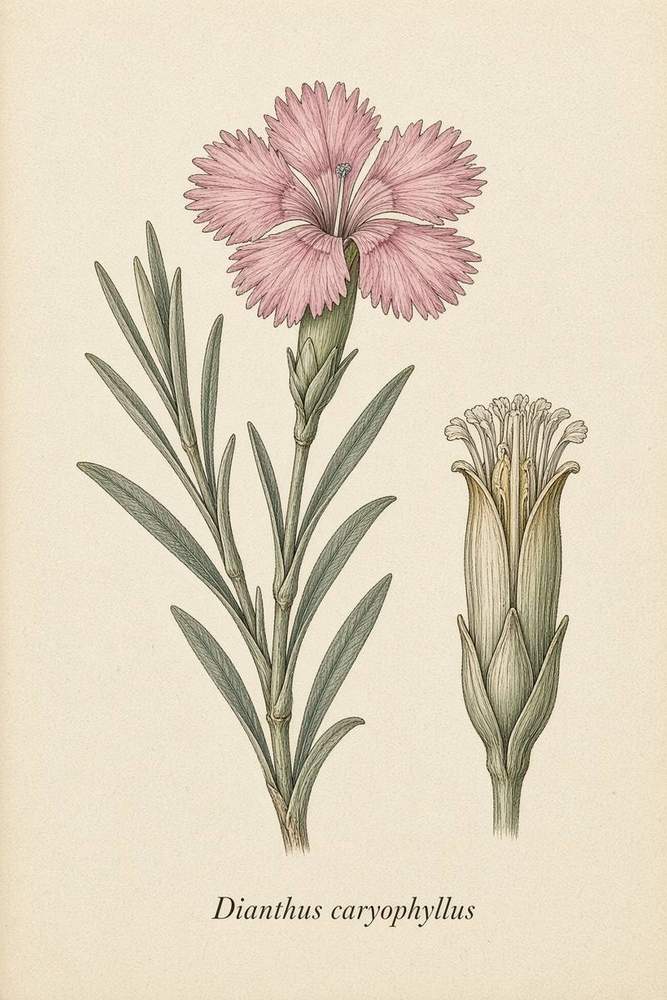
Clove pink
Dianthus caryophyllus
Caryophyllaceae
The clove-scented pink of old knot gardens — petals for syrup and vinegar, a grey-green edge that likes it lean.
Old-fashioned clove pink and cottage pinks. Florist carnations are often dyed and sprayed — eat only unsprayed garden flowers, petals only, white heel removed.
- Parts used
- Petal (white heel removed)
- Traditional notes
- Clove-pink syrup · Floral vinegar · Cake garnish
- Grow · USDA 6b
- Perennial, zone 5–8 for cottage types; carnation wants a milder winter or a cold frame. Seed or named cuttings. Division of cottage pinks in spring. In work: May · Jun · Jul · Aug
- Harvest
- Flowers at peak scent, in the cool of the morning.
- Lime if your soil is East Tennessee acid.
- A gravel mulch keeps the crown dry.
Safety
Only unsprayed garden flowers. Not dyed florist carnations.
Companions
Plant with Borage, Calendula, Cornflower, Dog rose, Garden peony, Heartsease.
Lore
Caryophyllus is the clove tree; Linnaeus smelled the same spice in the flower. Tudor cooks candied it. The florist carnation is a later, larger, often scentless enlargement — the cottage form still smells like a spice drawer.
The Herbarium — a teaching catalog, not a clinic. Traditional use is history, not a prescription. USDA 6b dates are a week either way, not a promise. Do not eat, drink, or harvest a plant you cannot name.