The Herbarium
Part I · Medicinal herbs
Herb. No. 156
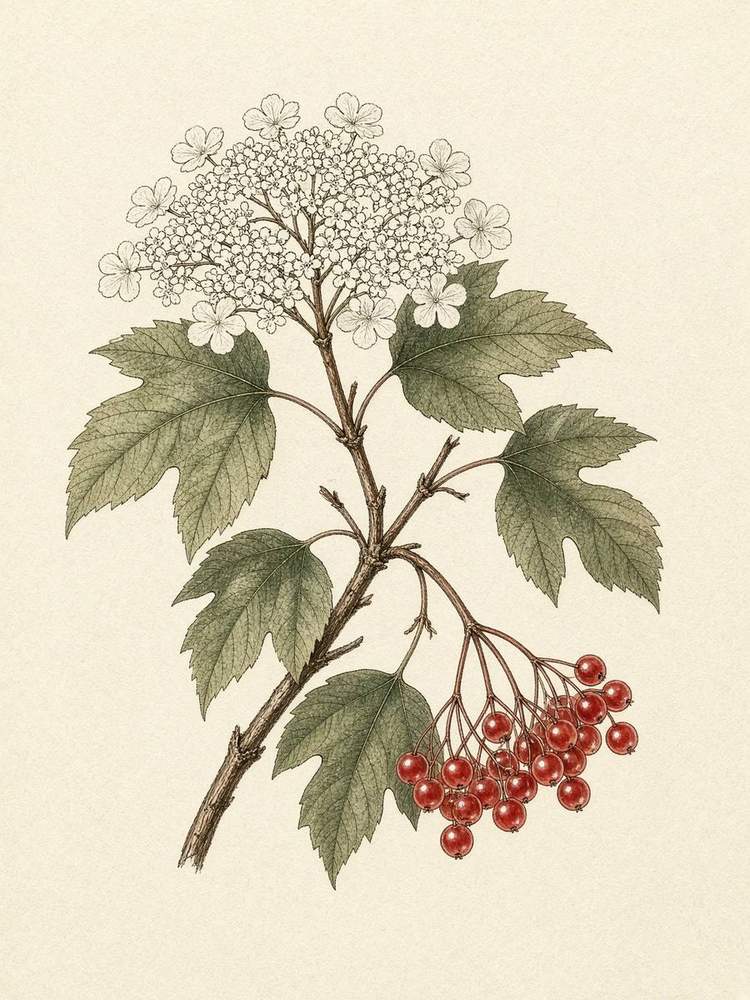
Cramp bark
Viburnum opulus
Viburnaceae
A hedge viburnum whose bark is the old antispasmodic of European midwives — a cramp folklore, not a candy.
Bark of European cranberrybush. Berries of some viburnums are mildly toxic raw. This plate is the bark.
- Parts used
- Dried bark
- Traditional notes
- Menstrual cramp folklore · Muscle spasm folklore
- Grow · USDA 6b
- Shrub, USDA 3–8 A nursery shrub. Named sterile ‘roseum’ types are snowball ornamentals without much fruit. In work: Sep · Oct · Nov
- Harvest
- Bark in autumn from a pruning you were doing anyway — never girdle a stem.
- A pruning is a harvest. A stripping is a killing.
- Guelder rose is the old English name.
Safety
Pregnancy without advice Eating the raw berries as if they were cranberries
Lore
Guelder rose is named for Gelderland. Ukrainian kalyna is a national plant, embroidered and sung, the berry more than the bark. Anglo-American herbalism kept the bark for cramp. The snowball viburnum in a front yard is often a sterile cousin that will not give you fruit or much bark folklore.
The Herbarium — a teaching catalog, not a clinic. Traditional use is history, not a prescription. USDA 6b dates are a week either way, not a promise. Do not eat, drink, or harvest a plant you cannot name.